
Landscape Plant Warranty Checklist: Records, Care, and Claims
On this page
- Quick answer
- Read terms before buying
- Understand what the warranty covers
- Create a planting-day baseline
- Document watering correctly
- Track care and site conditions
- Recognize warning signs early
- Contact the seller promptly
- Build a clear warranty claim
- Prepare for inspection
- Clarify replacement terms
- Handle disagreements calmly
- Recordkeeping checklist
- Frequently asked questions
- Next steps
Quick answer
A plant warranty is a contract with specific limits, not a promise that every plant will thrive. Before purchase, record the covered plants, term, exclusions, required watering and maintenance, notification deadline, proof needed, labor charges, and whether replacement resets the warranty.
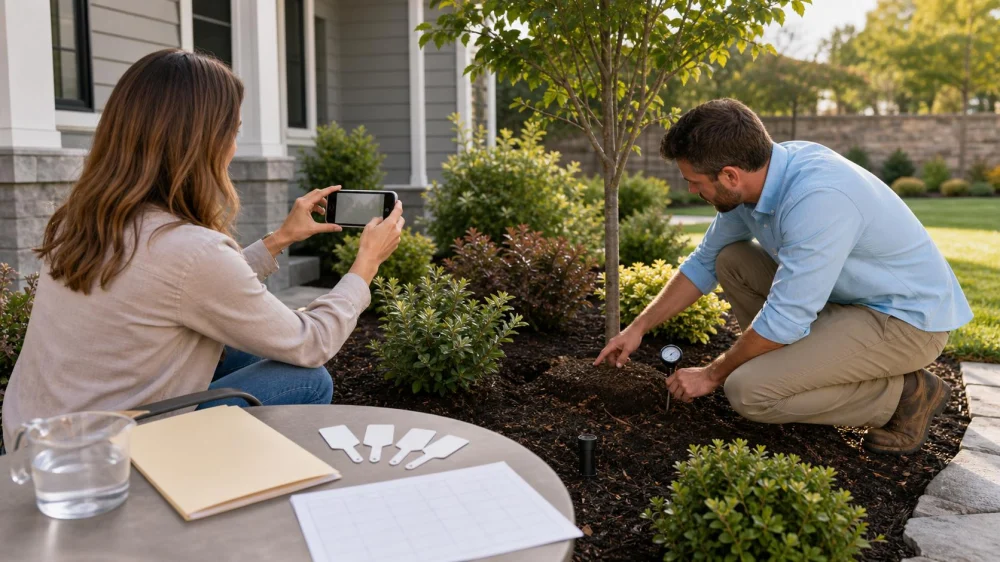
Photograph each plant, tag, planting location, root flare, mulch, and irrigation setup on installation day. Keep receipts, the plan, care instructions, and a dated watering and weather log. Report unusual decline early and follow written troubleshooting directions. When making a claim, identify the plant and location, describe the timeline, attach clear photos and records, and ask for the inspection and decision process in writing.
Read terms before buying
Ask for the complete warranty before approving the plant order or landscape proposal. Marketing phrases such as “one-year warranty” do not explain whether labor, delivery, removal, or only the plant material is included.
Confirm who provides the warranty: retail nursery, grower, landscape contractor, maintenance company, or manufacturer. The seller and installer may have separate responsibilities.
List every covered plant by botanical name, cultivar, size, quantity, and price. Some warranties exclude annuals, transplanted plants, clearance items, owner-supplied plants, bulbs, sod, seed, or specially ordered material.
Note when coverage begins: purchase, delivery, planting, substantial completion, or final payment. Record the exact expiration date rather than relying on “one season.”
Gendron's Landscape Construction LLC
WashingtonTazewell CountyIllinois
208 N Summit Dr, Washington, IL 61571, USA
Understand what the warranty covers
Read the definition of plant failure. A plant may be dormant, stressed, damaged, or partially dead without meeting the contract’s replacement standard. Some agreements allow the provider time to observe recovery.
Common exclusions include inadequate or excessive watering, irrigation malfunction, animal damage, extreme weather, freeze, drought, flooding, fire, vandalism, construction damage, salt, herbicide drift, pests, disease, poor soil, utility work, or care by another contractor.
Ask how preexisting site conditions are handled. Compacted soil, drainage, reflected heat, wind, deer pressure, and hardiness zone can affect survival. A responsible plan should match plants to the actual site.
Clarify whether the warranty is replacement-only, store credit, prorated value, or refund. Ask about delivery, digging, disposal, replanting, staking, irrigation adjustment, mulch, tax, and permit costs.
Create a planting-day baseline
Walk the installation with the contractor before acceptance. Match plants to the approved plan and invoice. Photograph the entire bed, then each plant from several angles with a location reference.
Capture the botanical tag, trunk or stems, canopy, root area, and visible damage. Do not remove required tags until the warranty terms allow it. Save tags in a labeled envelope if they must be removed.
Document planting depth, exposed root flare for trees where appropriate, mulch depth and distance from stems, stakes, ties, watering basin, and irrigation emitters. Do not disturb the planting to take a photo.
Note existing stress, broken branches, wilt, discoloration, loose root balls, or substitution. Report concerns immediately and record the provider’s response rather than waiting months.
Document watering correctly
Get written watering instructions specific to plant type, container or root-ball size, soil, season, and irrigation method. A generic schedule may not fit rainfall, drainage, or temperature.
Record date, approximate amount or run time, method, rainfall, and soil observation. A simple calendar, spreadsheet, irrigation-controller history, or dated notebook can work if entries are consistent.
Measure emitter output and confirm that water reaches the root ball rather than only nearby soil. Check for clogged, displaced, broken, or buried emitters. Lawn sprinklers may not provide appropriate deep watering for a new tree.
Avoid assuming wilt always means too little water. Saturated roots can also cause decline. Feel or measure soil moisture at an appropriate depth and ask the provider how to adjust after rain, heat, or seasonal change.
Track care and site conditions
Keep receipts and dates for mulch, soil amendments, fertilizer, pruning, pest treatment, and irrigation repair. Follow the warranty’s approved-care requirements and plant-specific guidance.
Photograph significant weather effects such as flooding, standing water, broken branches, hail, or snow load. Save official local weather records if an event may affect a claim, but do not expose yourself to unsafe conditions for documentation.
Note changes around the plant: construction, grading, trenching, new pavement, deicing salt, pet activity, herbicide use, or a different maintenance company. These can alter drainage, soil, roots, or exposure.
Do not make major pruning, transplanting, fertilizer, pesticide, or irrigation changes after decline begins without consulting the warrantor. An unapproved intervention can worsen the problem or complicate diagnosis.
Recognize warning signs early
Watch for persistent wilt, early leaf drop, canopy thinning, dieback, discoloration, trunk injury, loose root balls, girdling ties, standing water, exposed or buried roots, and pest or disease signs.
Some transplant stress is expected, and deciduous plants naturally lose leaves. Compare the plant with nearby examples and seasonal expectations. Scratch tests or branch bending can damage tissue and should not be the sole diagnosis.
Take repeat photos from the same viewpoint and in similar light. A dated series shows whether decline is spreading or recovery is occurring.
For a tree that is leaning dangerously, splitting, uprooting, or dropping large limbs, keep people away and contact a qualified tree professional promptly. Safety takes priority over warranty documentation.
Contact the seller promptly
Use the notice method required by the warranty—email, online form, phone followed by writing, or certified mail. Include the order number, plant, location, date planted, first symptoms, and current condition.
Ask for care instructions while waiting. Continue reasonable maintenance unless the provider directs otherwise. Save every message and note phone dates, names, and advice.
Do not wait until the last warranty day. Some policies require notice within a short period after symptoms appear, and early action may save the plant.
If the landscaper and nursery are different, notify both when responsibility is unclear. Avoid accusing either party before the cause is inspected.
Build a clear warranty claim
Organize the claim so another person can understand it quickly. Start with the contract and receipt, then provide the plant list, installation date, location map, baseline photos, care log, symptom timeline, current photos, and prior correspondence.
Use factual descriptions: “Upper branches turned brown between June 12 and June 20” is more useful than “The tree looks terrible.” Include a wide site photo and close views.
State the requested remedy based on the written warranty, such as inspection, replacement plant, credit, or clarification. Ask when the provider expects to respond.
Send copies rather than surrendering original records. Keep images at usable resolution and retain the original files with dates.
Prepare for inspection
Make the plant accessible and identify irrigation controls, emitters, downspouts, drains, and nearby utilities. Have care records available. Do not water immediately before inspection unless routine care requires it, because unusual watering can obscure soil conditions.
Ask who will inspect and whether a nursery professional, landscape contractor, certified arborist, horticulturist, irrigation technician, or laboratory is needed. Different causes require different expertise.
Request the findings and recommended next steps in writing. If the provider wants to wait for dormancy or new growth, confirm the observation period and whether warranty rights remain preserved.
Do not remove the plant before inspection unless it creates an immediate hazard or the provider gives written authorization. Photograph any emergency removal and retain relevant material only when safe and requested.
Clarify replacement terms
Before accepting replacement, confirm species, cultivar, size, season, availability, and whether a substitute requires approval. A smaller healthy plant may establish better, but value and design effects should be agreed upon.
Ask who removes the failed plant, tests or amends soil, corrects drainage, repairs irrigation, delivers the replacement, and disposes of material. Replanting without correcting the cause can repeat the failure.
Confirm whether labor and delivery are charged and whether the new plant receives a full, limited, or no additional warranty. Get the new start and end dates in writing.
Create a new baseline after replacement and restart the care log. Keep the original claim records linked to the replacement.
Handle disagreements calmly
Compare the decision with the exact written terms. Ask which observation and exclusion supports a denial. Request photographs, test results, or care requirements referenced in the decision.
If technical cause is disputed, consider an independent qualified arborist or horticulture professional. Ask about fees and whether a written report will address planting, irrigation, soil, weather, pests, and maintenance.
Use the company’s escalation process and provide a concise record. Consumer-protection options vary by location and contract; seek local guidance for significant disputes.
Do not withhold unrelated payment, remove property, post private information, or threaten staff without understanding contractual and legal consequences. Focus on evidence and the requested resolution.
Recordkeeping checklist
- Complete warranty and all exclusions.
- Receipt, proposal, plant schedule, and final invoice.
- Botanical names, cultivars, sizes, quantities, and tags.
- Installation date and exact warranty expiration date.
- Planting-day wide and close photographs.
- Written watering and care instructions.
- Dated watering, rainfall, irrigation, and maintenance log.
- Symptom timeline and repeat photos.
- Emails, forms, call notes, inspections, and decisions.
- Replacement terms and new warranty dates.
Frequently asked questions
Does a one-year warranty include labor?
Not necessarily. Some warranties cover only replacement plant material. Ask about removal, delivery, replanting, and disposal before purchase.
Will a warranty cover drought or freeze damage?
Many contracts exclude extreme weather or inadequate care, but terms vary. Read the exclusions and document both weather and compliance with instructions.
How often should I photograph new plants?
Take a baseline at planting, then periodic photos and additional images when conditions change. Use the same viewpoints so changes are easier to compare.
Should I remove a dead plant immediately?
Ask the warrantor first unless it creates an immediate hazard. Early removal can prevent inspection. If safety requires action, document the condition and removal thoroughly.
What if the original plant is unavailable?
Review substitution and credit terms. Agree on species, cultivar, size, value, design effect, and new warranty before accepting an alternative.
Next steps
Before installation, save the complete warranty and create a folder for each plant order. On planting day, photograph the site and care setup. Maintain a simple watering log, report decline early, and organize any claim around facts, dates, images, and the written contract.
This guide offers general recordkeeping information, not legal or horticultural advice. Plant care, warranty rights, and claim procedures depend on the contract, site, species, provider, and local law.


 Jutte's Fruit Farm and Landscaping4.0 (12 reviews)
 Fairfield Material And Supply4.0 (33 reviews)
 Move It Outdoors, INC.5.0 (13 reviews)
 Chew's Lawn Restoration4.0 (33 reviews)
 J&S Yard Works LLC4.0 (3 reviews)
 ACL Lawn Care Group Llc4.0 (13 reviews)
 How to Design for Noise Reduction Using Landscape Elements
 How to Grow a Native Plant Garden with Minimal Care – Expert Tips
 Best Native Plants for Drought-Tolerant Landscaping: A Guide for Sustainable Gardening
 7 Steps to Create a Pollinator Garden That Attracts Bees & Butterflies
 How to Revive a Neglected Lawn Step by Step
 How to Incorporate Hardscape Accents Into a Softscape Plan for Balanced Landscapes