
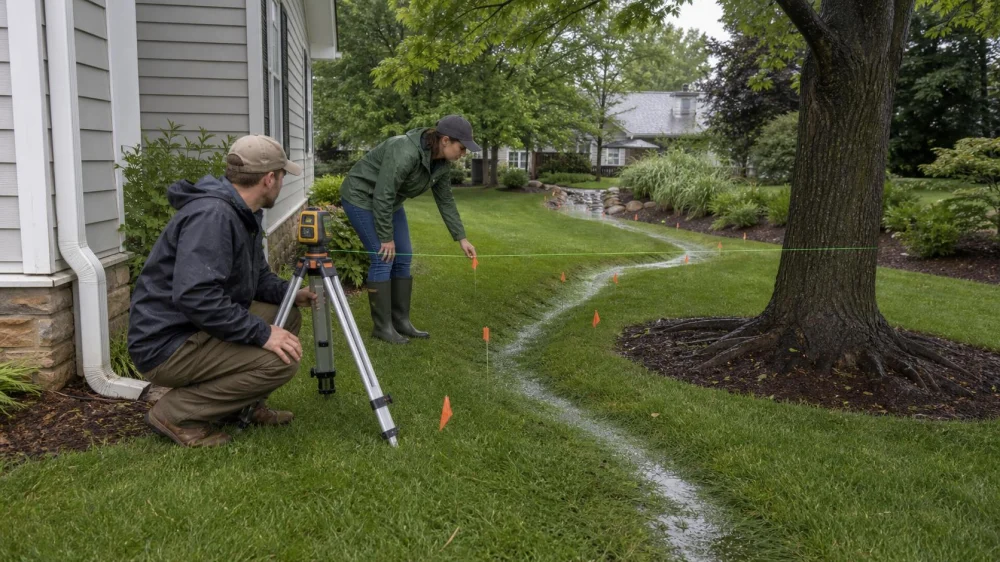
Yard Drainage Swale: Plan Grade, Outlet, and Erosion Control
On this page
Quick answer
A drainage swale is a broad, shallow channel that follows a controlled slope to move or temporarily slow runoff. Plan it only after observing where water starts, where it can legally discharge, and what lies underground. Use gentle side slopes, a stable vegetated or stone surface, and an erosion-resistant outlet. Never redirect water onto a neighbour or toward a foundation.

Ringers Landscape Services
Crystal LakeMcHenry CountyIllinois
2101 IL-176, Crystal Lake, IL 60014, USA
Observe water before designing
Walk the yard during safe rainfall and again after the storm. Photograph puddles, roof downspouts, concentrated flow, saturated beds, driveway runoff, and low points. Mark how long water remains. A swale can convey surface runoff, but it will not repair a broken pipe, failed sewer, high groundwater condition, or water entering through a damaged foundation.
Create a simple site sketch with buildings, property lines, fences, mature trees, septic areas, wells, retaining walls, patios, play spaces, and existing drains. Note soil that erodes or stays soft. If runoff comes from a roof or hardscape, estimate the contributing area with a designer rather than sizing the swale from the wet patch alone.
Ruble Outdoor Concepts (formerly Estes Grounds Maintenance)
GreenfieldHancock CountyIndiana
1587 N 600 W, Greenfield, IN 46140, USA
Choose a legal outlet and route
Every swale needs a destination. Possible outlets include an approved storm connection, street system, vegetated dispersion area, rain garden, or existing drainage easement, but local rules determine what is allowed. Some jurisdictions restrict work in easements, wetlands, rights-of-way, or near waterways and require permits or engineered plans.
The route should move water away from buildings without creating a new problem downhill. Do not discharge across a sidewalk where it can freeze, into a sanitary sewer, onto adjacent property, or at the top of an unstable slope. Obtain written approval when an association, municipality, easement holder, or neighbouring owner has authority.
Shape a maintainable swale
A swale should be broad enough to blend with the yard and shallow enough to mow or plant safely. Gentle side slopes reduce erosion and make crossing easier. The bottom needs a continuous fall toward the outlet without humps that trap water. Exact width, depth, and slope depend on runoff volume, soil, vegetation, and local design criteria.
Use a level, laser, or survey equipment to confirm elevations; visual judgment is unreliable across a lawn. Mark the proposed edges and walk the route before excavation. Check whether the channel would block gates, create a trip point, undermine a fence, isolate a play area, or send water across a path.
Select the surface
Turf is suitable where sunlight, soil, slope, and maintenance support dense growth. Seed or sod needs establishment protection before it receives concentrated flow. A planted bioswale can slow water and add habitat, but plant choices must tolerate both wet periods and dry intervals. Use region-appropriate species and allow for mature size.
Stone may reinforce a short high-flow section or outlet, but loose rock can migrate, collect debris, heat nearby plants, or become difficult to maintain. Landscape fabric under rock can clog or become exposed. A designer may specify erosion-control blankets, check structures, or engineered lining when velocity exceeds what vegetation can resist.
Protect utilities and structures
Contact the applicable utility-marking service before digging, even for shallow grading. Private irrigation, lighting, propane, septic, drainage, and electric lines may not be included in public markings and require separate locating. Preserve required cover and access, and hand-dig or use professional methods within marked tolerance zones.
Avoid cutting major tree roots or adding soil over root flares. Keep excavation away from foundations, footings, retaining-wall reinforcement, and septic components unless a qualified professional approves it. When elevation differences are small, a surveyor or civil engineer can determine whether the proposed fall is real and whether another drainage method is safer.
Inspect after construction
Before closing the project, confirm the route and outlet with a controlled water test only when local conditions permit. Do not flood neighbouring areas or overload a drainage system. After natural rain, look for standing water, overtopping, bare soil, displaced mulch, undercut stone, blocked inlets, and scour at the outlet.
Repair erosion promptly and keep vegetation dense. Remove leaves and sediment without deepening random sections. Recheck after landscaping, fence, patio, or downspout changes because these can alter flow. Maintain a photo record that shows the completed grades and underground features before they are covered.
Frequently asked questions
Is a swale the same as a French drain?
No. A swale is an open graded landform for surface water. A French drain uses subsurface aggregate and usually perforated pipe. Some sites combine systems, but each needs a suitable outlet and maintenance plan.
Can a swale stay wet?
Temporary wetness after rain may be expected, but persistent ponding can signal an uneven grade, compacted soil, blocked outlet, high groundwater, or undersized design. Diagnose the cause before digging deeper.
Do I need a permit?
Requirements vary. Work affecting drainage, easements, flood areas, rights-of-way, wetlands, or neighbouring properties may need review. Check with the local authority before excavation.
Evidence and limitations
This guide reflects common landscape drainage and erosion-control practice: observe the watershed, confirm grade and outlet, protect utilities, stabilize soil, and inspect performance. It cannot size a system or determine legal discharge rights for a specific property. Local codes, recorded easements, utility requirements, and a site survey take priority.
Conclusion and next steps
Document the runoff, map constraints, verify elevations, and identify an approved outlet before choosing a swale. Obtain utility markings and required reviews, then build a broad, stable, maintainable route. Watch it during actual rain and correct erosion or ponding before the surrounding landscape matures.




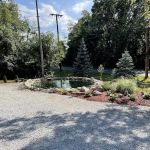 Burrows Lawn & Landscaping5.0 (2 reviews)
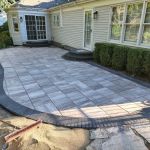 Vega’s Landscaping Inc4.0 (108 reviews)
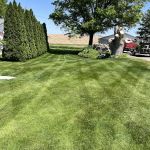 Roudabush Lawn Care, LLC4.0 (67 reviews)
 WISR Property Services5.0 (6 reviews)
 Midwest Land Solutions4.0 (19 reviews)
 Accelerated Sod0.0 (0 reviews)
 How to Create a Landscape That’s Perfect for Pets
 How to Plant Bulbs in Fall for Spring Color
 Best Ground Cover Plants to Suppress Weeds Naturally for Healthy Gardens
 How to Use Native Plants to Reduce Pest & Disease
 How to Landscape Around a Retaining Wall
 How to Properly Prune Shrubs & Small Trees for Healthy Growth