
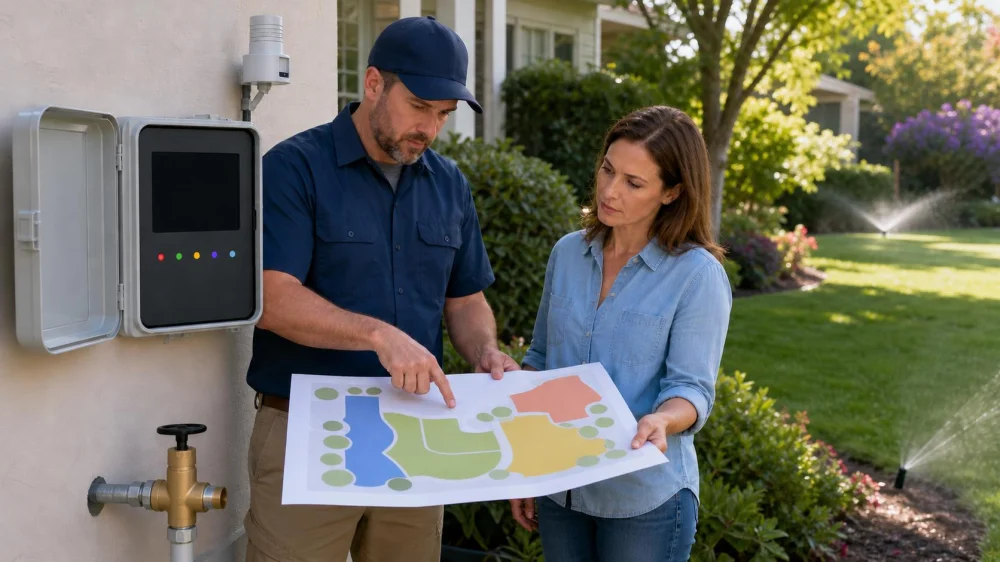
Irrigation Controller Handoff: Zones, Schedules, and Access
A new irrigation controller is not truly handed off when the installer says it is “set.” The owner needs a zone map, plant and emitter details, seasonal logic, sensor behavior, manual controls, access roles, alerts, and a way to stop water quickly. A documented walkthrough helps prevent silent leaks, sidewalk spray, dead plants, and a schedule that runs unchanged all year.
Quick answer
Before final payment, run every irrigation zone with the contractor. Mark valves, heads, drip lines, plant groups, sun exposure, and hardscape on a zone map. Record controller model, program logic, run days, start times, durations, seasonal adjustment, rain or soil sensor behavior, restrictions, passwords, shared access, alerts, warranty, and support. Practice starting one zone, pausing all watering, shutting off supply, and restoring automatic mode. Inspect the system monthly and adjust for conditions.
Build a zone map
Number zones exactly as they appear in the controller. On a site plan, outline the area each one serves and note sprinkler, rotor, bubbler, drip, or microirrigation type. Mark valves, boxes, filters, pressure regulators, backflow devices, sleeves, drains, and the main shutoff.
List the primary plants, turf, establishment status, soil, slope, and sun or shade for each zone. Different plant and application needs should not be assumed to share one schedule merely because they are nearby.
Photograph valve boxes and concealed routes before mulch or planting hides them. Do not rely on app names such as “front” when several future users must find the physical equipment.

Barr Landscaping & Lawn Service, Inc.
3613 W Farmington Rd, Peoria, IL 61604, USA
Run each zone
Use manual operation to run one zone at a time while walking the property with the installer. Watch every head rise and retract, confirm drip emitters flow, and look for broken heads, blocked spray, misting, pooling, runoff, erosion, overspray, and water striking walls, windows, sidewalks, or vehicles.
Verify matched precipitation and head spacing as designed. Check that drip filters and flush points are accessible. A short test may not reveal deep pooling, so ask how long to observe.
Record repairs on a punch list and retest. Do not reach into a pressurized head or open a valve box with electrical or wildlife hazards present.
Understand the schedule
Write down allowed watering days and local drought restrictions. Identify every program, start time, zone duration, soak cycle, day exclusion, and seasonal adjustment. Multiple start times can accidentally repeat a full program.
Ask how new-plant establishment differs from the long-term schedule and when the change should occur. Soil, weather, roots, sun, plant type, and application rate matter more than a permanent calendar.
The EPA WaterSense program notes that schedules should be adjusted for seasonal changes and that zones should group similar plant, sprinkler, sun, and soil needs. Record who is responsible for changes.
Test weather and moisture inputs
Identify rain, freeze, wind, flow, and soil-moisture sensors and show where each is installed. Test the override or status indication according to manufacturer instructions. Confirm whether a sensor pauses all zones or only certain programs.
Weather-based controllers use local weather and site inputs to tailor watering, while soil-moisture systems can prevent scheduled irrigation when the soil does not need water. Neither removes the need to inspect for leaks, bad placement, failed sensors, or incorrect configuration.
Document fallback behavior if internet, power, weather data, or a sensor fails. Know whether the controller keeps a stored schedule, stops, or sends an alert.
Control accounts and connectivity
The owner should control the primary account, recovery email, phone number, password, multifactor authentication, site address, and billing. Remove temporary installer access or define its role and expiration.
Review privacy and data-sharing settings for location and weather services. Record Wi-Fi or network requirements without putting passwords on the outdoor controller or public plan.
Test alerts for flow, skipped watering, offline status, freeze, or another supported condition. Decide who receives them during travel and who has authority to respond.
Learn manual start and shutdown
Practice starting and stopping a single zone from the controller and app, then returning the system to automatic mode. Learn how to pause for rain, an event, construction, a broken head, or maintenance without erasing the schedule.
Locate and label the irrigation shutoff and understand whether closing it affects building water or fire protection. Use a qualified professional when valves are inaccessible, damaged, or shared.
For uncontrolled water threatening a building, road, electrical equipment, or slope, stop flow if safe and contact the responsible professional or utility. Do not enter flooded electrical areas.
Keep records and inspect monthly
Save the final plan, as-built zone map, controller and sensor manuals, model and serial details, receipts, warranties, permits, backflow test records, settings export, contractor contact, and login ownership.
Inspect monthly during the watering season. EPA recommends checking for leaks, broken or clogged heads, misdirected spray, and drip problems. Review water bills and flow alerts for unexpected changes.
Update the map and schedule after plant removal, mature growth, new hardscape, grade changes, repairs, or restrictions. A controller is part of a changing landscape, not a set-and-forget appliance.
Frequently asked questions
Should every zone run the same number of minutes?
No. Plant needs, soil, sun, slope, and application type vary. Use a professionally developed zone schedule.
Does a smart controller eliminate inspections?
No. Sensors and data cannot detect every clogged emitter, broken head, leak, or site change.
Who should own the app account?
The property owner or authorized manager should control the primary account and recovery methods.
How do I stop one broken zone?
Learn the controller and valve procedure during handoff; do not wait for an emergency.
Next steps
Schedule a final walkthrough with the zone map in hand. Run every zone, correct the punch list, export settings, transfer account ownership, test sensors and alerts, practice manual stop and shutdown, and put a monthly irrigation inspection on the calendar.
Use the EPA WaterSense watering tips for current efficiency guidance.




 Clounie Landscaping5.0 (2 reviews)
 Eden Lawn & Landscaping4.0 (8 reviews)
 The Ground Crafter, LLC4.0 (24 reviews)
 LandArt, Inc.3.0 (27 reviews)
 Fralich's Landscape4.0 (110 reviews)
 E and N Property Services5.0 (2 reviews)
 How to Plan Landscape Access for Easier Maintenance
 Irrigation Controller Handoff: Zones, Schedules, and Access
 How to Choose the Right Soil & Amendments for Your Region
 Tips for Maintaining a Lawn in a Hot, Dry Summer | Beautiful Landscapes
 How to Choose the Right Mulch for Effective Weed Suppression
 How to Use Decorative Gravel & Stone Finishes for Stunning Landscapes