
Tree Stakes and Ties: Inspect, Adjust, and Remove on Time
On this page
- Decide whether staking is needed
- Record the installation
- Check the trunk and root ball
- Inspect ties for rubbing and pressure
- Review stake placement and stability
- Allow useful trunk movement
- Monitor after wind and weather
- Plan timely removal
- Handle problems safely
- Coordinate watering, mulch, and protection
- Stake and tie checklist
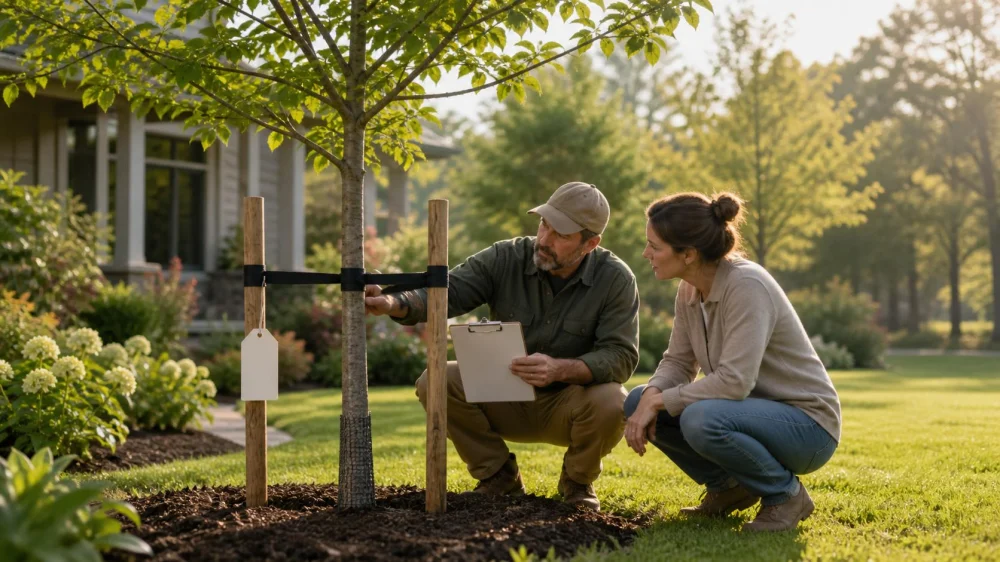
Tree stakes and ties are temporary supports, not permanent parts of a landscape. They may help a newly planted tree when the root ball is unstable, the site is exposed, or the trunk cannot stand upright. Unnecessary, tight, or forgotten staking can rub bark, restrict growth, weaken trunk development, and create hazards.
Follow the planting contractor's plan and current guidance from a qualified arborist or local extension service. Tree species, size, root condition, soil, wind, and installation method all matter. Inspect from the ground and keep ladders, power lines, storm-damaged trees, and heavy leaning trunks within professional scope.

Kingdom Lawn Care LLC
Lake MillsJefferson CountyWisconsin
120 S Main St Suite B, Lake Mills, WI 53551, USA
Decide whether staking is needed
Many correctly planted small trees can stand without stakes. Support may be appropriate when the root ball shifts in the planting hole, the canopy catches strong wind, roots are limited, or the trunk lacks enough strength. Ask the installer to explain the specific reason.
Do not add stakes solely because every nearby tree has them. Excess support prevents the movement that helps a tree develop taper and strength. If an established tree suddenly leans, treat it as a possible root or structural problem rather than applying a casual tie.
Record the installation
Write the planting date, species, installer, stake count, tie material, expected inspection interval, and planned removal date. Take ground-level photos from several sides. Keep the plant warranty and care instructions with the record.
Add a calendar reminder well before the maximum support period. Landscapes change quickly during active growth, and a tie that begins loose can become tight. Assign inspection to a named person instead of assuming the crew will return automatically.
Check the trunk and root ball
From a safe position, observe whether the trunk is upright and whether the root ball remains stable when ordinary wind moves the canopy. Look for soil cracking, lifting, settling, exposed roots, pooling water, or a root flare buried by added soil or mulch.
Do not rock the trunk forcefully to test it. Movement at the root ball, a new lean, broken roots, or soil failure requires professional evaluation. Correcting planting depth or root problems can involve more than tightening support.
Inspect ties for rubbing and pressure
Tree ties should be broad, flexible, and arranged according to professional guidance. Check for abrasion, compressed bark, discoloration, swelling around the tie, cracked material, exposed wire, or a knot slipping toward the trunk. Never wrap bare wire, rope, or narrow cord directly around bark.
Branches and trunks expand during growth. A tie that no longer leaves appropriate room must be adjusted or removed by someone who understands the support system. Do not cut a loaded line while standing in its path; released tension can move stakes and hardware suddenly.
Review stake placement and stability
Stakes should support the intended system without piercing the root ball, leaning into paths, or creating an unseen trip hazard. Check whether lawn equipment, vehicles, animals, or weather have loosened them. Keep caps or visibility markers in place when specified.
Do not drive a new stake without locating utilities and irrigation. Underground lines may run near a young tree. Ask the installer or a qualified professional to reposition unstable hardware rather than improvising with more stakes.
Allow useful trunk movement
The goal is usually root-ball stability with some appropriate trunk movement, not rigid immobilization. Ties placed too high or pulled too tightly can prevent normal sway. The correct height and tension depend on the tree and site.
Ask an arborist to demonstrate what normal movement looks like. A homeowner should not loosen every tie based on a generic measurement. Document the adjustment and compare later photos under similar calm conditions.
Monitor after wind and weather
Inspect from the ground after strong wind, heavy rain, flooding, snow load, or nearby construction. Look for a changed lean, broken ties, pulled stakes, split soil, hanging branches, or contact with utilities and structures.
Keep away from a tree touching power lines or showing major storm damage and contact the utility or emergency service as appropriate. Do not stand beneath broken limbs. Small-tree staking is not a substitute for managing a hazardous tree.
Plan timely removal
Support should remain only as long as needed. The installer or arborist should give an expected review and removal window based on establishment, not an indefinite promise. At that review, assess root stability, trunk strength, exposure, seasonal conditions, and evidence from every prior inspection.
Remove all ties, stakes, straps, tags, and buried or concealed components that the plan identifies. Count items before and after. Forgotten wire or a strap hidden by foliage can girdle growth years later.
Handle problems safely
Contact the installer or arborist for a leaning tree, shifting root ball, injured bark, embedded tie, broken trunk, unstable stake, or repeated loosening. Preserve photos and warranty records. Do not pull a leaning tree upright with a vehicle or winch.
For a minor tie issue on a small accessible tree, follow specific professional instructions and use appropriate gloves and tools. Stop if the support is under tension or the tree moves unexpectedly. Protect people and property before attempting any adjustment.
Coordinate watering, mulch, and protection
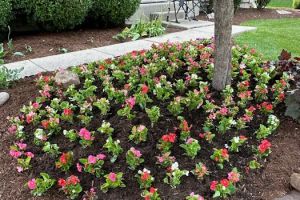
Staking cannot compensate for poor planting care. Follow a condition-based watering plan, keep mulch away from direct trunk contact, manage weeds, and protect the root zone from compaction. Check irrigation spray and soil moisture rather than watering only by calendar.
Keep mower and trimmer damage away with thoughtful bed design, not a tight guard around the trunk. Remove nursery labels and ties that are no longer needed. Avoid attaching lights, signs, pet leads, hammocks, or decorations to support stakes.
Stake and tie checklist
Record the reason, date, system, tie material, inspection schedule, and removal target. Check root-ball stability, trunk movement, bark, tie tension, stake position, weather changes, utilities, irrigation, and nearby paths from a safe location.
A successful staking system becomes unnecessary. Regular inspection protects the trunk while roots establish, and timely removal lets the tree respond naturally to wind. When the tree, hardware, or site presents more than a simple maintenance issue, a qualified arborist should decide the next step.



 BNL Landscaping LLC.3.0 (15 reviews)
 Staley Lawncare and Landscaping5.0 (14 reviews)
 Wolf Pack Hardscaping LLC5.0 (113 reviews)
 R & G Almanza Landscape Inc4.0 (44 reviews)
 Patriot Outdoor Services LLC5.0 (9 reviews)
 Platinum Patio and Pavers5.0 (53 reviews)
 How to Choose the Right Soil & Amendments for Your Region
 How to Grow a Vertical Vegetable Garden on Fences
 How to Use Mulch Colors to Enhance Plant Look and Garden Aesthetics
 How to Incorporate Hardscape Accents Into a Softscape Plan for Balanced Landscapes
 How to Design a Kid-Friendly Garden Space for Safe Outdoor Fun
 How to Build Garden Steps That Look Natural