
Downspout Extension Landscape Guide: Route Roof Water Safely
Table of contents
Quick answer
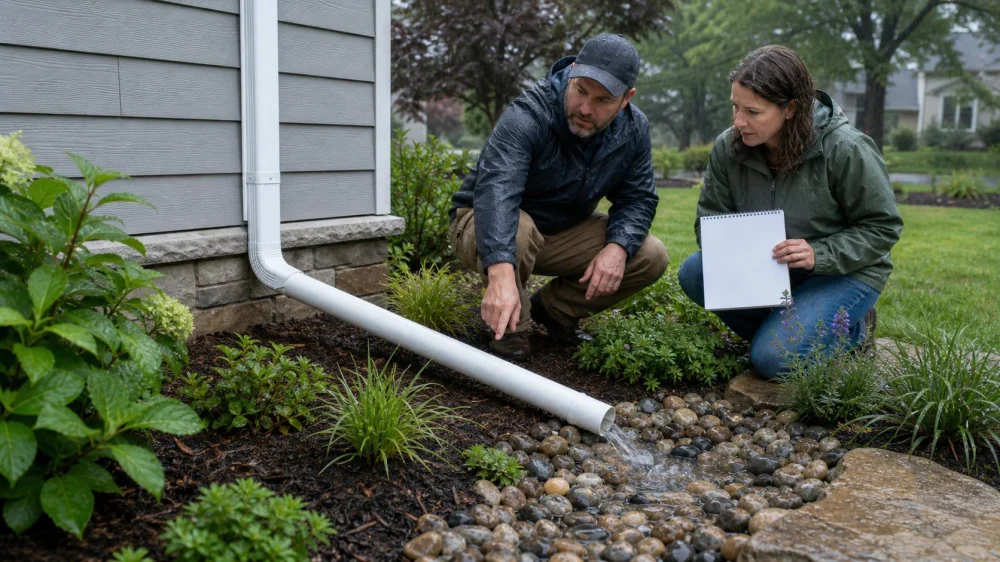
A downspout extension should carry roof water away from the foundation to a lawful location where it can spread, slow, and soak in without flooding structures, sidewalks, septic areas, or neighboring property. Observe flow during rain, check grading and local rules, select a durable above- or below-ground route, protect the outlet from erosion, and inspect after every major storm.
Great Lakes Landscape Inc.
BrookfieldWaukesha CountyWisconsin
14460 W Capitol Dr, Brookfield, WI 53005, USA
Watch the yard in rain
Begin with observation rather than a length of pipe. During a moderate rain, safely watch each downspout and note overflowing gutters, leaking joints, foundation ponding, soggy turf, eroded mulch, icy walkways, and water crossing a property line. Photograph the route from roof to outlet.
Estimate the roof area feeding the downspout and note whether several roof planes converge there. A short intense storm can send much more water than a garden hose test suggests. If gutters overflow before water reaches the downspout, solve the gutter capacity, blockage, or slope issue first.
Choose a safe outlet
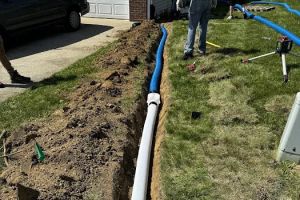
The destination matters more than the tubing. Favor a stable vegetated area that slopes gently away from buildings and has enough space to accept water. Maintain clearance from foundations, retaining walls, wells, septic systems, utilities, and vulnerable slopes based on local requirements and site conditions.
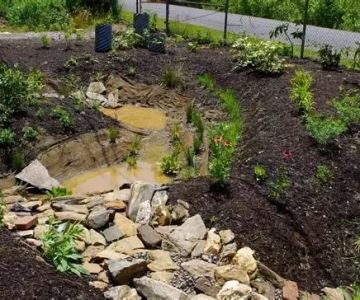
Do not direct water onto sidewalks, driveways, a neighbor’s lot, or a steep bare bank. Avoid creating standing water near play areas or entries. In poorly draining soil, a rain garden, dry well, swale, or other engineered approach may need a soil test, overflow route, permit, and professional design.
Compare extension options
| Option | Strength | Watch for |
|---|---|---|
| Hinged solid extension | Simple, visible, easy to inspect | Trip and mower conflicts |
| Flexible surface tube | Fast routing around obstacles | Sags, crushing, and standing water |
| Buried solid pipe | Clear surface and protected route | Clogs, utilities, slope, and hidden failures |
| Rain barrel | Captures some water for reuse | Overflow, mosquito screen, and winter care |
| Rain garden or swale | Slows and infiltrates runoff | Soil, setback, capacity, and overflow design |
Perforated pipe is not automatically appropriate near a foundation because it releases water along its length. Solid pipe is generally used to convey water to the intended infiltration area. A landscape or drainage professional can choose the right system for the soil and slope.
Plan the installation
- Confirm local stormwater, utility, and property-line requirements.
- Call 811 before any digging and wait for required utility markings.
- Map a continuous downhill route or design a system that manages elevation safely.
- Use compatible fittings and keep joints accessible where possible.
- Support surface extensions so they do not sag or disconnect.
- Protect the outlet with vegetation, stone, or a splash-control detail.
- Provide a visible, safe overflow route for extreme storms.
Do not connect roof drainage to a sanitary sewer or unknown underground pipe without authorization. Hidden connections may be prohibited or overload public systems.
Maintain the drainage path
Clean gutters and strainers on an appropriate schedule, especially after leaf drop and storms. Inspect joints, buried cleanouts, barrel screens, outlet erosion, plant health, and signs of backup. Keep the discharge path free of mulch dams, weeds, snow, and stored items.
After installation, watch at least one real storm. A design that works with a hose can still fail when the roof delivers concentrated runoff. Recheck the basement or crawl space, nearby pavement, and downslope property.
Project checklist
- Map the roof area and every downspout.
- Observe actual rain and photograph problems.
- Check grading, soil, setbacks, and local rules.
- Call 811 before digging.
- Choose a lawful outlet away from structures and hazards.
- Use durable compatible pipe and fittings.
- Control erosion and create an overflow route.
- Test during rain and inspect seasonally.
Limits and professional help
Hire a qualified drainage, landscape, or foundation professional when water enters the building, the lot is steep, soil stays saturated, retaining walls are involved, the only outlet approaches neighboring property, or an underground system is required. Foundation cracks, mold, and electrical hazards need appropriate specialists.
Rain barrels and infiltration systems have finite capacity. They do not replace a safe overflow. Never enter a flooded area with possible electrical contact, and do not excavate until underground utilities are marked.
Evidence behind this guide
The U.S. Environmental Protection Agency explains that redirecting downspouts to lawns, gardens, rain barrels, or rain gardens can reduce runoff, while warning that site conditions, local rules, and discharge location must prevent property damage and unsafe conditions. See EPA downspout redirection guidance and EPA residential stormwater options.
Frequently asked questions
How long should an extension be?
There is no universal length. It must reach a safe location based on grade, soil, foundation design, rainfall, and local requirements.
Can I bury flexible corrugated tubing?
Some products are rated for burial, but corrugations and sags can hold debris. Choose pipe based on manufacturer instructions and drainage design.
Can a rain barrel take all roof runoff?
Usually not during large storms. It needs a screened inlet, stable base, controlled overflow, and seasonal maintenance.
Why is the outlet eroding mulch?
Concentrated flow is too energetic for the surface. Spread the discharge, stabilize the outlet, and reassess capacity rather than adding loose mulch.
Next steps
Walk the property during rain, map each problem, and choose a lawful vegetated outlet with a safe overflow route. Check local rules and utilities, install the appropriate conveyance and erosion protection, then observe the next storm and correct any ponding, backup, or unintended runoff immediately.




 ZGreen Landscape INC4.0 (24 reviews)
 KMS Gardens & Design5.0 (1 reviews)
 Sebert Landscape4.0 (47 reviews)
 Luna Landscape Pro5.0 (1 reviews)
 Walmart Patio & Garden Services0.0 (0 reviews)
 Umbrella Property Services4.0 (67 reviews)
 How to Transition from Sod to Native Meadow
 How to Install a Drip Irrigation System in Your Landscape
 How to Choose Drought-Resistant Grass for Your Region: Expert Tips
 How to Plan a Landscape for Easy Irrigation and Drainage
 How to Plant for Privacy Along Property Lines
 How to Plan a Backyard That Balances Play and Relaxation