
Understanding Privacy Needs Before Planting Along Property Lines
Learning how to plant for privacy along property lines begins with understanding what “privacy” actually means in a landscape setting. For some homeowners, it is about blocking a neighbor’s direct line of sight into a patio. For others, it is about reducing noise, wind exposure, or visual clutter from nearby streets.
Unlike fences, plants take time to grow into their full function. That means planning ahead is essential. You are not just filling space—you are designing a living structure that will evolve over years. A poorly planned layout can leave awkward gaps or uneven coverage that becomes frustrating later.
One homeowner in a suburban development shared how they initially planted random shrubs too close together without considering mature width. Within three years, overcrowding forced them to remove half the plants, showing how early planning directly affects long-term success.

EDUARDO SERVICES BUILDING AND JANITORIAL KZO
KalamazooKalamazoo CountyMichigan
916 S Park St, Kalamazoo, MI 49001, USA
Choosing the Right Plants for Natural Privacy Screening
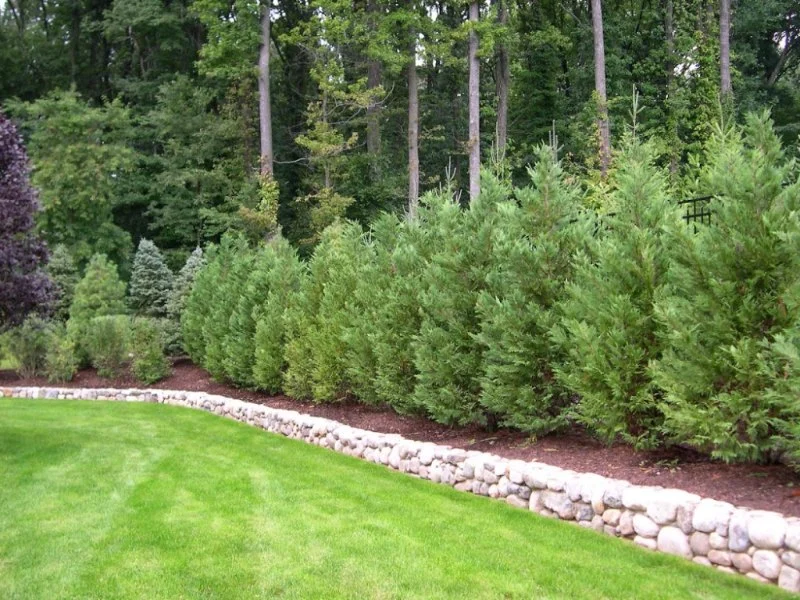
Selecting plants is the foundation of effective privacy landscaping. The goal is to create a barrier that feels natural, dense, and visually appealing throughout the year. Evergreen species are often preferred because they maintain coverage even during colder seasons.
Fast-growing privacy trees such as arborvitae, cypress, and certain bamboo varieties are commonly used when quick results are needed. However, growth speed should always be balanced with maintenance requirements and climate suitability.
Shrubs also play an important role. They fill lower gaps and create depth, preventing the screen from looking like a flat wall. Layering different plant heights creates a more organic and stable visual barrier.
Many landscaping experts recommend mixing evergreen screening plants with seasonal flowering shrubs to avoid monotony. This approach not only improves privacy but also enhances curb appeal.
For homeowners seeking structured guidance and plant selection ideas, Beautiful Landscapes offers inspiration and practical resources for building long-lasting privacy solutions tailored to different yard conditions.
DeYoung Landscape Service Inc.
KalamazooKalamazoo CountyMichigan
3832 W F Ave, Kalamazoo, MI 49009, USA
Designing a Layered Privacy Barrier That Feels Natural
A successful privacy screen is rarely a single row of plants. Instead, it is a layered system that combines trees, shrubs, and ground-level vegetation. This creates depth and reduces the “wall effect” that artificial fences often produce.
The back layer usually consists of taller trees or dense evergreens. The middle layer includes shrubs that fill visual gaps. The front layer may include decorative plants or low hedges that soften the transition into open lawn or garden space.
Spacing is critical in this design process. Planting too close can lead to competition for nutrients, while spacing too far apart can leave unwanted visibility gaps. Proper balance ensures healthy growth and consistent coverage over time.
In one real backyard redesign project, homeowners replaced a wooden fence with a layered planting system. Within four years, their yard transformed into a fully enclosed green space that provided privacy without feeling enclosed or artificial.
Planting Techniques That Improve Long-Term Growth Success
Understanding soil preparation is just as important as choosing the right plants. Healthy root development determines how quickly and effectively your privacy screen will establish itself.
Before planting, soil should be tested for drainage quality. Poor drainage can lead to root rot, especially in evergreen species that are commonly used for property line privacy.
Watering strategies also play a major role in early growth stages. Newly planted trees and shrubs require consistent moisture, but overwatering can be just as damaging as neglect.
Mulching around the base of plants helps regulate soil temperature and retain moisture. It also reduces weed competition, which can otherwise slow down growth and weaken young plants.
A common mistake homeowners make is expecting immediate results. Privacy planting is a gradual process, and most landscapes require at least two to three growing seasons before reaching full density.
Maintaining Privacy Plantings for Year-Round Effectiveness
Once established, privacy landscaping requires ongoing maintenance to stay healthy and visually effective. Regular pruning helps control shape and encourages dense growth, especially in hedge-style plantings.
Seasonal inspections are important for identifying dead branches, pest issues, or thinning areas. Addressing these problems early prevents gaps from forming in the privacy barrier.
Fertilization schedules should be tailored to plant types and local soil conditions. Over-fertilizing can cause excessive growth that weakens structural stability, while under-fertilizing slows development.
Weather conditions also influence maintenance needs. In windy or storm-prone areas, support stakes may be necessary for young trees until their root systems are fully established.
Real-World Examples of Privacy Landscaping Transformations
A particularly interesting case involved a homeowner living next to a busy walking path. Instead of installing a tall fence, they opted for a mixed evergreen and shrub border. Within a few years, the yard became a secluded green space while still maintaining a natural connection to the environment.
Another example comes from a rural property where wind exposure was a major issue. Strategic planting of fast-growing trees along the property line not only improved privacy but also reduced wind impact on outdoor living areas.
These examples show that privacy landscaping is not just about blocking views—it can also improve comfort, microclimate conditions, and overall outdoor usability.
The key takeaway from these real cases is that successful planting always combines patience, planning, and plant selection suited to the environment rather than quick visual fixes.
 Leaf Landscaping & Hardscaping5.0 (22 reviews)
 Nic Ehr Landscape Co Inc5.0 (3 reviews)
 Whalen Property Management5.0 (17 reviews)
 Andy's Lawn & Landscape4.0 (12 reviews)
 Sharp Cuts Lawn & Landscaping4.0 (11 reviews)
 Dentino Lawn Designs4.0 (97 reviews)
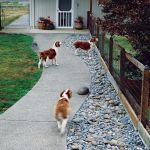 How to Create a Landscape That’s Perfect for Pets
 How to Grow Herbs and Vegetables in Limited Space
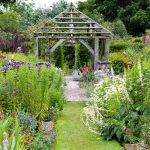 How to Design a Garden That Changes All Year
 How to Grow a Vertical Vegetable Garden on Fences
 How to Attract Birds & Butterflies to Your Landscape
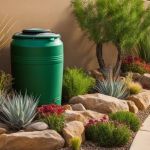 Xeriscaping 101: Save Water & Create a Beautiful Yard