
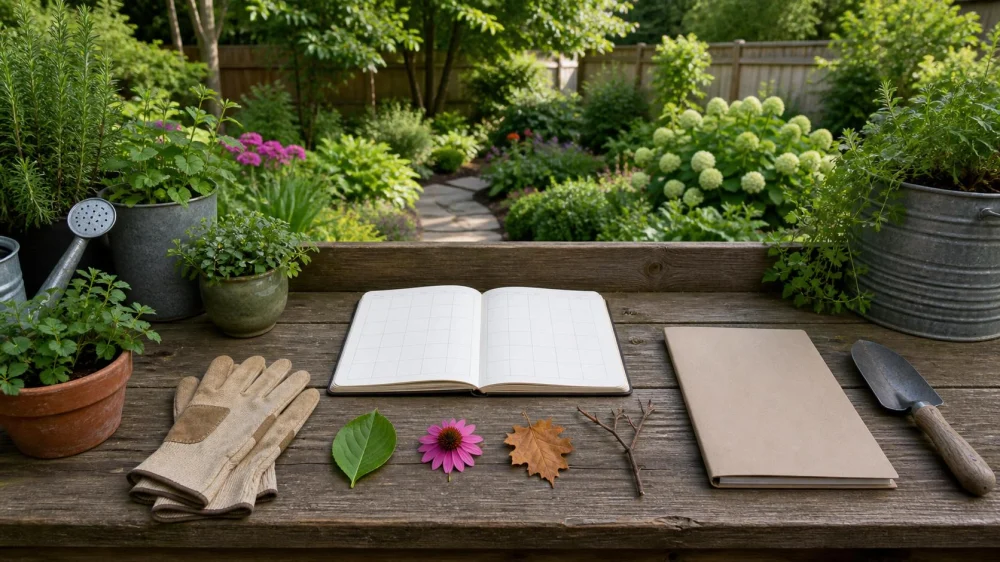
Seasonal Landscape Maintenance Calendar: Plan by Conditions, Not Fixed Dates
On this page
Quick answer
Build a landscape maintenance calendar from the plants, site systems, and local conditions you actually have. List each bed, tree, lawn area, hardscape, drainage feature, irrigation zone, and seasonal container. Then schedule inspection windows tied to weather and plant development—soil thaw, active growth, flowering, heat, leaf drop, freeze risk—rather than copying fixed national dates.
Separate routine observation from corrective work. Many problems are easier to address when recorded early.

Start with a site inventory
A calendar cannot be specific until the landscape is identified. Use the plant plan, nursery records, tags, and photographs to create a working list. Add sun exposure, soil or drainage issues, irrigation coverage, access needs, and warranty dates.
- Trees and large shrubs
- Hedges, perennials, groundcovers, and bulbs
- Lawn or lawn alternatives
- Irrigation, hoses, and outdoor faucets
- Paths, walls, edging, drains, and lighting
- Containers, furniture, and seasonal features
Use seasonal triggers
Calendar months mean different conditions across the United States and from year to year. Connect tasks to observable triggers. A spring inspection can begin after snowmelt and safe access; irrigation startup follows freeze risk and local guidance; heat checks begin when soil dries faster; fall work follows leaf drop or dormancy.
Use local extension resources, municipal watering rules, and plant-specific guidance to translate triggers into approximate dates for your region.
Group tasks by purpose
Organizing by purpose reduces missed dependencies. Inspection comes before purchase; soil information comes before amendment; pruning timing depends on the plant and reason; irrigation checks come before changing run time.
- Observe: plant condition, weeds, pests, leaks, settlement, and drainage.
- Prevent: clear blocked drains, correct mulch contact, and protect access.
- Maintain: water, mow, edge, prune, clean, and divide as appropriate.
- Repair: broken heads, trip hazards, damaged supports, and failed plants.
- Plan: order materials, book specialists, and review next season.
Set realistic frequencies
Use ranges such as weekly during establishment, monthly during active use, after major storms, or once during dormancy when that matches the task. Avoid a schedule so dense that observations are ignored or work is done unnecessarily.
Include extra checks after heat waves, freezes, high wind, construction, irrigation repairs, or changes in drainage. Adjust frequency as plants establish and systems age.
Record work and observations
For each task, record date, location, conditions, action, material or product, quantity when relevant, contractor, and follow-up date. Photograph the same viewpoint over time. Keep invoices, plant names, soil results, irrigation changes, and warranties linked to the site map.
A simple table or phone note is enough if it stays current and understandable to another household member or contractor.
Flag professional work
Mark tasks that may require a certified arborist, licensed pesticide applicator, irrigation specialist, electrician, engineer, or other qualified professional. Examples include large-tree work, electrical faults, structural walls, hazardous drainage, utility conflicts, and pesticide uses beyond your knowledge or equipment.
Schedule high-demand seasonal work early and confirm permits or utility locating before any excavation.
Important limitations
This is general U.S. planning guidance, not a regional maintenance schedule. Plant species, climate, water rules, fire restrictions, pests, soil, equipment, and codes vary. Follow local extension, product labels, utility requirements, and qualified professional advice.
Evidence notes
Extension “right plant, right place” guidance connects plant performance to light, soil, climate, water, and space. A condition-based calendar continues that principle after installation by linking maintenance to the site and plant stage instead of an arbitrary date.
FAQ
Should every task have an exact date?
No. Many tasks work better with a seasonal window and an observable trigger.
How detailed should the inventory be?
Detailed enough to identify the plant or feature, location, need, and responsible person.
Should watering stay on the same schedule all year?
No. Adjust to plant stage, weather, soil, regulations, and observed moisture.
What should I record after a storm?
Note drainage, erosion, plant damage, leaning, debris, system faults, and access hazards.
Can a contractor use the calendar?
Yes. Mark responsibility, scope, timing window, records required, and follow-up.
Next steps
Walk the property, list every plant group and system, select six to ten high-value inspection windows, and assign responsibility. Add local guidance and update the calendar after each season.





 JCR Landscaping Services LLC3.0 (2 reviews)
 Complete Trees & More LLC5.0 (28 reviews)
 AE Landscape Borders Fort Wayne4.0 (152 reviews)
 RR Land Construction5.0 (3 reviews)
 Fox Hole Site Services LLC5.0 (1 reviews)
 Designer Landscapes Inc4.0 (28 reviews)
 How to Landscape With Large Pots and Statement Planters for Modern Homes
 The Rise of Tapestry Lawns: Living Ground Cover Alternatives for Modern Yards
 How to Landscape Around a Retaining Wall
 How to Landscape Using Recycled or Reclaimed Materials | Beautiful Landscapes
 How to Prep Your Yard for a Landscape Makeover
 Tips for Maintaining a Lawn in a Hot, Dry Summer | Beautiful Landscapes