
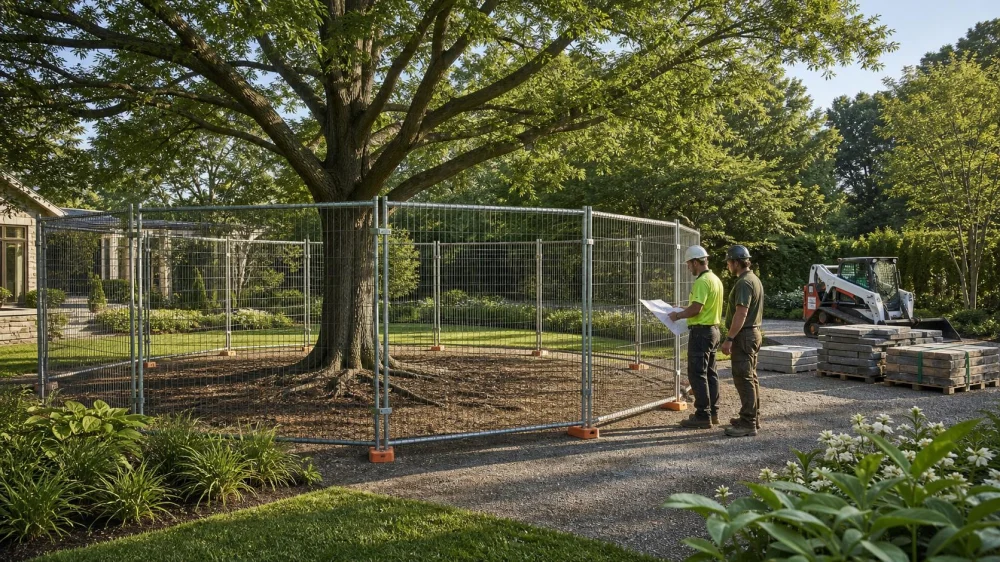
How to Protect Existing Trees During a Landscaping Project
On this page
- Quick answer
- Inventory trees before design
- Define a protected root zone
- Route people, machines, and materials
- Manage unavoidable root-zone work
- Inspect protection throughout the job
- Tree-protection checklist
- Limitations and warning signs
- Frequently asked questions
- Official sources and evidence notes
- Mark the no-go zone first
Quick answer
Protect an existing tree before landscaping begins, not after machines arrive. Identify trees to retain, have valuable or vulnerable specimens assessed, establish a fenced protected root zone, and keep excavation, grading, trenching, parking, foot traffic, storage, washout, and soil stockpiles outside it. Put the limits on the plan and review them with every contractor. If work must enter the zone, obtain tree-specific guidance before disturbing soil or roots.
Trunk boards alone do not protect the roots, soil, or canopy that keep a tree alive.

Walmart Patio & Garden Services
CrawfordsvilleMontgomery CountyIndiana
1835 US-231, Crawfordsville, IN 47933, USA
Inventory trees before design
Record species if known, trunk location, approximate size, canopy spread, visible condition, grade changes, utilities, drainage, and nearby structures. Photograph the trunk, major limbs, and soil surface from consistent angles. Decide which trees are to remain, which require assessment, and whether any removal needs local permission.
Consult an appropriately qualified arborist for high-value trees, trees near structures, declining specimens, or projects involving major grading and excavation. The best layout often moves a path, wall, irrigation trench, or equipment route before construction rather than trying to repair root damage later.

Skarda Landscape Supply
Menomonee FallsWaukesha CountyWisconsin
W177N8413 Lynwood Dr, Menomonee Falls, WI 53051, USA
Define a protected root zone
A root system extends beyond the trunk and often beyond the canopy edge. The appropriate protected area varies with species, size, health, soil, slope, and proposed work. Ask the arborist or local authority to define it; do not invent one universal radius.
Install sturdy, visible fencing before site clearing or delivery. Show the same boundary on drawings and scope documents. Add signs that prohibit entry, digging, grade changes, storage, parking, mixing, washout, and fastening materials to the tree. Keep the fence in place until the risk-producing work is complete.
Route people, machines, and materials
Heavy equipment and repeated foot traffic compress soil, reducing pore space for air and water. Establish one access route, staging area, spoil pile, mixing area, and washout location away from protected trees and runoff paths. Account for turning radii, delivery trucks, outriggers, and material reach rather than drawing a route that cannot work in practice.
Keep fuels, concrete washout, paint, chemicals, and salty or contaminated water away from soil and storm drains. Cover or stabilize loose soil and stockpiles as required. EPA notes that construction runoff can carry sediment, nutrients, pesticides, oil, debris, and other pollutants into water systems.
Manage unavoidable root-zone work
Pause before trenching, cutting roots, raising grade, lowering grade, paving, or changing drainage in a protected area. Ask whether utilities can be rerouted, tunneled, or installed by a less disruptive method. Root pruning, if appropriate, should be planned and performed with suitable tools and oversight rather than torn by an excavator.
Do not pile extra soil or mulch against a trunk. Avoid severing large structural roots or exposing roots to drying. Irrigation changes also matter: a retained tree can be harmed when its former water source disappears or when a new system keeps the root crown too wet.
Inspect protection throughout the job
Name one person who can stop work when fencing moves or plans change. Check boundaries after deliveries, storms, weekend work, and subcontractor arrival. Photograph violations and correct the cause, not only the visible damage.
At handover, compare the original photos, verify that fencing removal caused no damage, and document any root, trunk, canopy, drainage, or grade concern. Agree on monitoring and watering appropriate to local conditions. Tree decline can appear months or years after construction, so retain project records.
Tree-protection checklist
- Inventory retained trees and local requirements.
- Obtain arborist input where risk or value warrants it.
- Show protected zones on every relevant plan.
- Install fencing before deliveries and clearing.
- Route equipment, storage, spoil, and washout elsewhere.
- Approve any protected-zone entry before work begins.
- Inspect fencing and soil after major activities.
- Document condition and follow-up at handover.
Limitations and warning signs
- This guide cannot calculate a safe root-protection distance for a specific tree.
- Tree-protection and removal rules vary by jurisdiction.
- Do not work beneath hanging or damaged limbs without a qualified assessment.
- New lean, cracked soil, lifted root plate, large torn roots, trunk impact, or major limb failure requires prompt professional evaluation.
- Do not enter an active equipment zone to inspect a tree.
Frequently asked questions
Is fencing at the drip line always enough?
No. Root distribution and required protection depend on the tree and site; a qualified professional or local rule should set the boundary.
Can materials be stored inside the fence briefly?
Keep the protected zone free of storage and traffic unless a written, tree-specific plan expressly allows an activity.
Should exposed roots be painted or sealed?
Do not improvise a treatment. Protect roots from damage and drying and obtain arborist direction.
Can I add soil to hide surface roots?
Grade changes can reduce oxygen and alter water movement. Discuss the specific tree and design before adding or removing soil.
Who should inspect the protection?
Assign a project representative for routine checks and use an appropriately qualified arborist for technical decisions or damage assessment.
Official sources and evidence notes
USDA Forest Service guidance on protecting trees from construction damage recommends defining a protected root zone and keeping damaging work away. EPA WaterSense guidance advises limiting vegetation removal and soil compaction and installing temporary protective fencing around tree root zones.
Mark the no-go zone first
Before accepting a delivery date, walk the site with the landscaping lead, mark each retained tree's approved protection boundary, and photograph the installed fence. Do not release the project to start until access and staging can function outside it.


 Border Magic by Bruns Borders LLC5.0 (4 reviews)
 Countryside Landscapes Inc5.0 (4 reviews)
 Abide R.E. Solutions5.0 (2 reviews)
 Mr. Frosty Snow, Affordable Lawn Care, Landscaping & Excavating1.0 (8 reviews)
 Eastern Iowa Landscape Services, LLC4.0 (24 reviews)
 J. J. Sanchez Landscaping Inc0.0 (0 reviews)
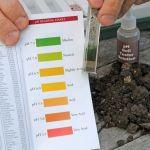 How to Use pH Levels to Optimize Plant Growth
 How to Manage Slopes & Drainage in Your Yard - Beautiful Landscapes
 How to Build a Stone Pathway With a Natural Flow
 How to Use Decorative Gravel & Stone Finishes for Stunning Landscapes
 How to Use Groundcovers as a Living Mulch for Healthier Gardens
 How to Grow Herbs and Vegetables in Limited Space