
Plan Landscape Spacing With Mature Plant Size
On this page
Quick answer
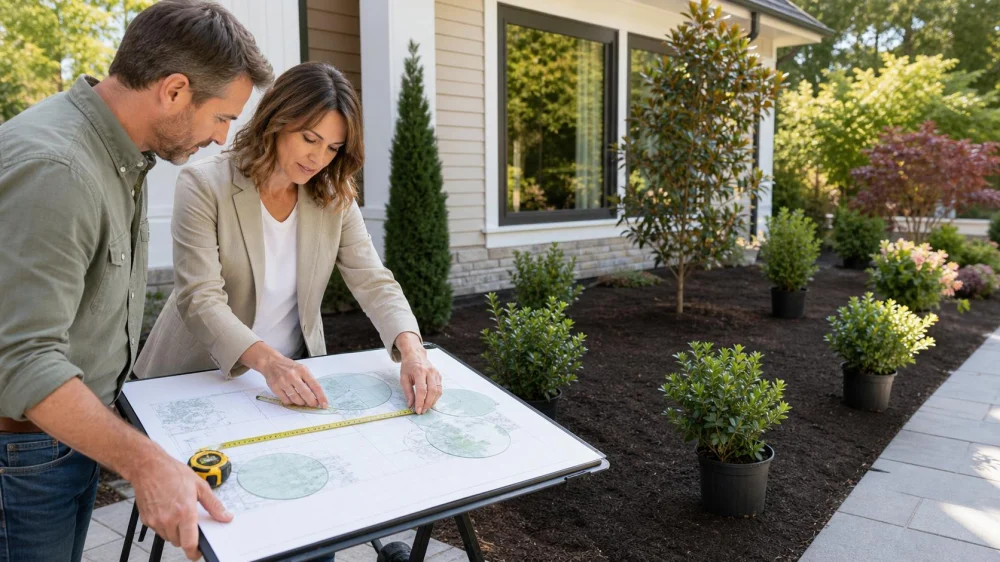
Design with each plant's expected mature height and spread, not the size of its nursery pot. Measure the usable bed, draw mature plant footprints to scale, and preserve clearance from walls, windows, walks, utilities, rooflines, and neighboring property. Use a smaller cultivar when the space is tight. Temporary mulch, annuals, or movable containers can fill early gaps while woody plants grow.
Mature spread is the approximate width a plant is expected to reach under suitable growing conditions. It is a planning range, not a guaranteed final dimension; climate, soil, water, light, genetics, pruning, and competition affect actual growth.
American Landscape
Menomonee FallsWaukesha CountyWisconsin
N60W16073 Kohler Ln, Menomonee Falls, WI 53051, USA
Read plant size information carefully
Use the full cultivar name when researching a tree or shrub. Plants in the same species can have very different forms and sizes. Compare the nursery tag with a regional university extension source, botanic garden, or reputable grower, and confirm that the information refers to the exact cultivar.
- Height: Check whether the plant will block a window, sign, light, solar panel, or sightline.
- Spread: Use the diameter, not the radius, when drawing the plant footprint.
- Habit: Upright, columnar, mounded, arching, suckering, and spreading plants occupy space differently.
- Growth behavior: Note self-seeding, running roots, low branches, thorns, fruit drop, and whether the plant responds well to pruning.
Map the usable planting space
- Measure the bed's length and depth at several points.
- Mark doors, windows, steps, vents, meters, faucets, drains, downspouts, utility equipment, and property boundaries.
- Include overhead wires, roof eaves, vehicle doors, gates, and snow-storage or trash-bin areas.
- Draw existing trees and shrubs at their mature canopy size, not only the trunk.
- Record sun, soil drainage, wind exposure, and hardiness conditions before selecting plants.
A plant that physically fits but cannot tolerate the site's light, moisture, soil, or winter conditions is not the right choice. Mature size and growing requirements must be evaluated together.
Turn mature spread into a practical layout
For individual specimen plants, start by drawing a circle or oval equal to the expected mature spread. The plant center generally needs about half that spread from a wall or boundary, plus any maintenance or safety clearance appropriate to the site. Do not treat this as a universal building code; local rules and plant forms vary.
For a hedge, decide whether the goal is a continuous screen or distinct individual forms. Closer spacing can close gaps sooner but also increases competition and may require more pruning. Follow cultivar-specific recommendations rather than applying one formula to every hedge.
- Choose the full-size plant when: the site can accommodate its natural form and long-term function.
- Choose a compact cultivar when: the mature footprint would crowd circulation, structures, or neighboring plants.
- Avoid relying on constant shearing when: the plant's natural size greatly exceeds the space or it does not tolerate repeated hard pruning.
Spacing checks for special locations
Foundations: Leave room for air movement, inspection, painting, window access, and maintenance. Keep plants from covering vents, equipment, and drainage features.
Walks and driveways: Account for arching branches, thorns, fruit, snow clearance, parked vehicles, and the path people actually use. Protect sightlines at driveway exits and corners.
Utilities: Contact 811 before digging and respect underground marks. Keep utility panels, meters, hydrants, and shutoffs accessible. Consult the utility about required clearances around overhead lines and equipment.
Property edges: Keep the mature canopy and maintenance access on the intended property unless a shared arrangement is agreed upon. Check local rules for fences, corner visibility, and public rights-of-way.
Common spacing mistakes to avoid
- Buying by current appearance and ignoring the cultivar's mature spread.
- Installing extra shrubs to make a new bed look instantly full.
- Assuming every plant can be kept small through pruning indefinitely.
- Forgetting the width of a mature evergreen's lower branches.
- Planning only the foliage and not access for ladders, hoses, windows, or equipment.
- Using invasive or aggressive plants without checking regional guidance.
Early gaps are normal in a long-lived landscape. A mulch layer, annual flowers, short-lived filler perennials, or containers can provide visual finish without committing the space needed by growing shrubs.
Evidence note: The “right plant, right place” approach and planning for mature height and width are consistent with current University of Minnesota Extension guidance on planting trees and shrubs. Exact sizes and spacing must come from cultivar-specific and regional sources; no single rule applies to every plant.
Frequently asked questions
Should two shrubs be spaced by adding their mature radii?
That is a useful starting point when you want their natural forms to meet without heavy overlap. Adjust for plant habit, design intent, growing conditions, and cultivar guidance.
Can I plant closer for a faster privacy screen?
Sometimes, but closer spacing can increase competition and maintenance. Compare the desired closure time with long-term plant health and access before deciding.
Are nursery tag sizes always accurate?
They are estimates and may reflect particular conditions or timeframes. Verify the exact cultivar using reliable regional references and ask what conditions produced the stated size.
What if existing shrubs are already overcrowded?
Identify each plant and evaluate health, structure, and pruning tolerance. Selective removal, transplanting when appropriate, renovation pruning, or replacement with smaller cultivars may work better than repeated severe shearing.
Next steps
Measure the bed, list every fixed clearance, research the exact cultivar, and place mature-size circles on a scaled sketch. Review the plan from the street, windows, paths, and maintenance areas. If plants only fit when permanently forced smaller, revise the palette before buying.
 Good Earth Landscaping4.0 (11 reviews)
 Country Gardens Landscaping4.0 (25 reviews)
 Allenia Space5.0 (4 reviews)
 The Ranch Landscaping Professionals LLC4.0 (8 reviews)
 M.C. Landscaping Inc.3.0 (7 reviews)
 Easy Go Lawn Care5.0 (10 reviews)
 How to Plan for Emergency Drought in Landscaping
 Best Perennials for Year-Round Color in Your Home Garden
 How to Landscape for Seasonal Wildlife Attraction: Creating Habitats for Nature's Visitors
 How to Design a Garden That Changes All Year
 Plan Landscape Spacing With Mature Plant Size
 How to Convert a Lawn Into a Wildflower Meadow