
- 1. Introduction: The Appeal of Garden Ponds in Modern Landscaping
- 2. Planning Your Garden Pond Integration
- 3. Creative Design Ideas for Your Pond
- 4. Materials and Features for a Modern Pond
- 5. Pond Maintenance and Care Tips
- 6. Real-Life Examples of Modern Pond Integrations
- 7. Final Tips for Successful Pond Integration
1. Introduction: The Appeal of Garden Ponds in Modern Landscaping
Garden ponds are an exquisite way to enhance your outdoor space, combining both natural beauty and tranquility. When integrated into a modern landscape, a well-designed pond can become the focal point of your garden, offering both aesthetic appeal and functional benefits. Whether you’re looking to create a serene retreat or add a touch of luxury to your backyard, a garden pond can transform your outdoor living area.
In this article, we’ll explore how to effectively integrate a garden pond into a modern landscape design, providing you with inspiration, practical advice, and key design elements to consider.
2. Planning Your Garden Pond Integration
Before diving into the design and installation of your garden pond, it’s crucial to plan carefully. Consider the following factors to ensure your pond complements the modern aesthetics of your landscape:

Gateway Landscape Supply
MilwaukeeMilwaukee CountyWisconsin
1121 W Grange Ave Suite 100, Milwaukee, WI 53221, USA
2.1. Location
Choose a location that enhances the flow of your landscape. Ponds are most effective when they’re visible from key areas, such as patios, decks, or seating areas. However, it’s important to also consider the surrounding environment, ensuring that the pond fits naturally into the overall layout without overwhelming the space.
2.2. Size and Scale
The size of the pond should be proportional to your garden and home. In a modern landscape, less can be more, so opt for a sleek, minimalistic pond design rather than something overly large. A small pond can have a significant impact, particularly if it incorporates clean lines and subtle features.
2.3. Purpose and Functionality
Consider how you intend to use the pond. Will it be primarily decorative, or will it serve a functional purpose such as attracting wildlife or providing a habitat for fish? This will influence the design elements you incorporate, such as the depth of the water, types of plants, and the presence of fish or water fountains.
3. Creative Design Ideas for Your Pond
Once you have a clear plan in mind, the next step is to explore design ideas that align with modern landscaping trends. Here are some creative concepts to help you get started:
3.1. Minimalist and Contemporary Designs
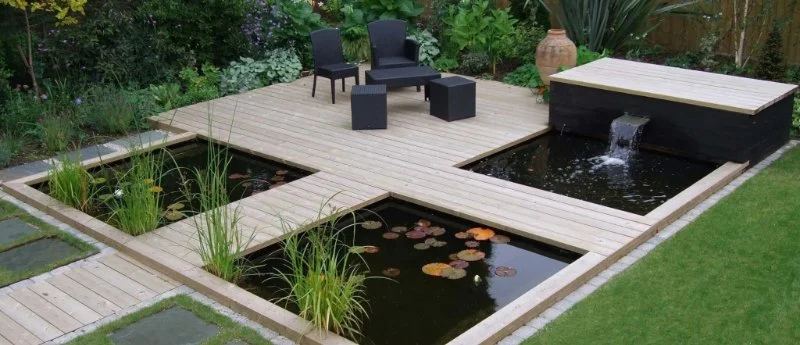
Modern landscapes often embrace clean lines and simplicity. A minimalist pond design with geometric shapes—such as rectangles, circles, or even square ponds—can add a touch of elegance and sophistication. Pair these shapes with sleek stone or concrete edging to create a streamlined and modern aesthetic.
3.2. Pondless Waterfalls
If you’re looking to create a low-maintenance water feature, consider a pondless waterfall. These water features recirculate water, creating a beautiful flow without the need for a traditional pond. Pondless waterfalls work particularly well in modern settings, providing visual interest and calming sounds without the maintenance of standing water.
3.3. Naturalistic and Ecological Designs
For a more organic feel, try blending your pond with the natural surroundings. Choose a design that incorporates rocks, plants, and other elements found in nature to create a pond that feels like a seamless extension of the landscape. In addition, opt for native aquatic plants and materials that promote biodiversity and contribute to the ecological balance of your garden.
4. Materials and Features for a Modern Pond
The materials you choose for your pond will greatly affect its look and feel. When designing a modern garden pond, consider the following materials:
4.1. Natural Stones and Rocks
Incorporating natural stones or rocks around the pond can add texture and contrast. Modern ponds often feature a combination of smooth, polished stones and rougher, organic textures for a balanced look.
4.2. Concrete and Stainless Steel
Concrete is a popular material for modern pond designs due to its versatility and sleek appearance. It can be used to form precise geometric shapes or poured into custom molds. Stainless steel elements such as waterfalls or ponds with steel borders can also contribute to a clean, industrial aesthetic.
4.3. Aquatic Plants
Adding aquatic plants is an essential part of any pond design. In modern landscapes, plants like water lilies, lotuses, and reeds can be carefully chosen to complement the pond’s design. Consider planting these in strategic locations, ensuring they enhance the pond without overpowering the design.
5. Pond Maintenance and Care Tips
While ponds can be relatively low-maintenance, they do require some care to keep them looking pristine and healthy. Here are a few maintenance tips:
5.1. Regular Cleaning
Keep your pond clean by removing debris such as leaves and twigs. Use a skimmer net to catch floating debris, and clean the pond’s filtration system regularly to maintain clear water.
5.2. Water Quality Management
Test the water quality regularly to ensure the proper balance of pH, oxygen levels, and nutrient content. This is particularly important if you have fish or plants in the pond. Consider using a pond aerator to improve oxygen circulation in the water.
5.3. Seasonal Care
During the winter months, ensure your pond is properly maintained by removing plants and fish or providing them with adequate care to survive colder temperatures. In spring and summer, you may need to prune plants and manage algae growth.
6. Real-Life Examples of Modern Pond Integrations
Here are a few examples of beautiful garden ponds seamlessly integrated into modern landscapes:
6.1. Case Study: Urban Oasis
In an urban setting, a homeowner incorporated a minimalist rectangular pond with a stainless steel edge. The pond was placed next to a modern seating area, creating a relaxing retreat in the heart of the city. The design made use of sleek stones, reeds, and water lilies to create a serene, yet contemporary feel.
6.2. Case Study: Eco-Friendly Pond
A family in a rural area designed a pond that blends naturally with their landscape. Using local rocks and native plants, they created a small ecological pond that provides a habitat for wildlife and supports biodiversity. This pond is both functional and visually appealing, with its naturalistic design fitting perfectly within the surrounding environment.
7. Final Tips for Successful Pond Integration
Before you begin installing your pond, keep these tips in mind:
7.1. Hire a Professional
If you’re unsure about the design and installation process, consider hiring a landscape professional who specializes in water features. They can help you choose the best location, materials, and design elements for your modern pond.
7.2. Consider the Surrounding Landscape
Ensure that your pond complements the rest of your landscape. Incorporate matching materials, colors, and styles that create a cohesive, harmonious look.
7.3. Enjoy the Process
Designing and creating a pond is a rewarding experience. Take your time to experiment with different ideas and enjoy the journey of creating a stunning water feature for your garden.
If you’re looking for more inspiration or need professional guidance, visit Beautiful Landscapes for top recommendations and services that can help bring your pond project to life.
 Clark Landscaping4.0 (27 reviews)
 Davis Landscape Service5.0 (2 reviews)
 C&M Property Managers0.0 (0 reviews)
 Custom Concrete Professionals5.0 (2 reviews)
 Ludwig Lawn Care3.0 (6 reviews)
![Paul Terry Services Lawn Care and Landscaping [PTS]](https://img.beautifullandscapes.net/d41/2510/185751733304179_150x150.webp) Paul Terry Services Lawn Care and Landscaping [PTS]4.0 (104 reviews)
Paul Terry Services Lawn Care and Landscaping [PTS]4.0 (104 reviews) How to Cultivate a Wildflower Meadow at Home: A Step-by-Step Guide
 How to Incorporate Ornamental Trees Into Small Landscapes: A Beginner’s Guide
 How to Use Mulch to Retain Moisture & Control Weeds
 How to Use Companion Planting to Reduce Pests
 How to Use Perennials to Create a Low Maintenance Garden
 How to Use Lighting to Highlight Trees and Focal Plants – Tips for Stunning Landscapes