
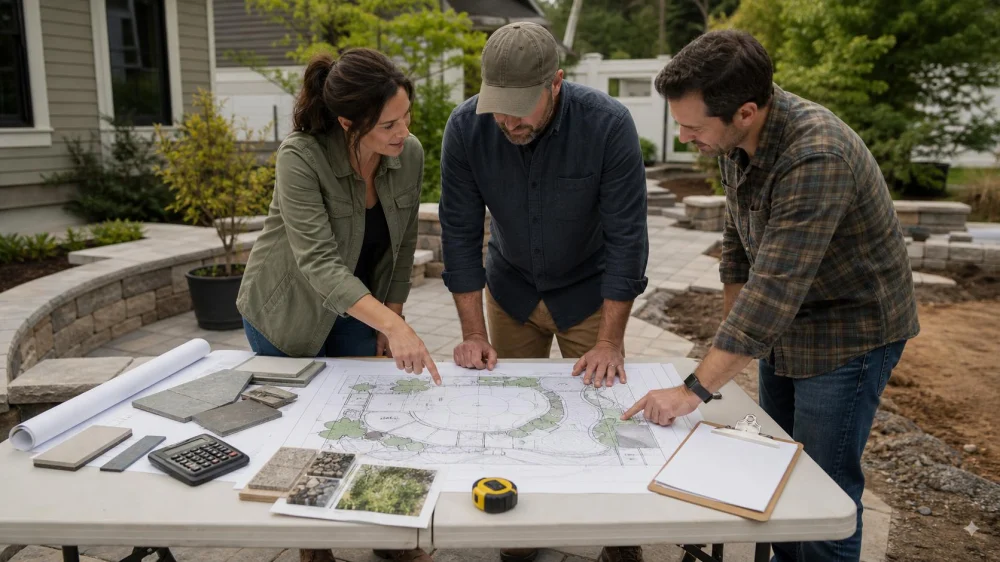
Landscape Change Orders: Approve Scope, Cost, and Schedule
On this page
Quick answer
A landscape change order is a written amendment that changes the contracted work, price, materials, or schedule. Before approval, require a specific description of what is added and removed, itemized cost or pricing method, revised completion impact, warranty effect, and signatures from authorized parties. Do not rely on a casual site conversation when the change affects money or performance.

Identify what triggered the change
Changes often begin with a homeowner request, unavailable product, concealed site condition, permit comment, weather damage, measurement conflict, or contractor recommendation. Record the date, location, and reason. Distinguish a genuine change from work already included in the original drawings, specifications, proposal, or contractor responsibility.
Photograph concealed conditions before they are covered. Examples include unexpected concrete, unsuitable soil, unmarked private lines, roots, drainage structures, or damaged subgrade. Ask what investigation occurred before bidding and whether another option avoids the change. An unexpected condition does not automatically establish who pays; the contract and local law matter.
Write the revised scope
Describe the exact quantity, dimensions, location, product, colour, finish, installation method, and disposal work. State both additions and deductions. “Upgrade patio” is too vague; a useful change identifies the approved plan area, base preparation, paver model or performance specification, border, cuts, joint material, and affected drainage.
Attach a marked plan or sketch with revision date. List which original note or line item is replaced and which remain unchanged. For planting substitutions, compare botanical identity, installed size, mature size, sun, soil, water, maintenance, warranty, and seasonal appearance. A same-price plant is not necessarily an equivalent design choice.
Check cost and allowances
Request labour, material, equipment, subcontractor, delivery, disposal, permit, tax, overhead, and markup details at the level the contract requires. Confirm whether the price is fixed, estimated, time-and-materials, or a unit rate. If work is deleted, the change should show the credit and any documented restocking or cancellation charge.
For allowances, compare the original included amount with the selected item and installation difference. Ask whether the change affects payment milestones or deposit requirements. Do not approve an open-ended amount without a not-to-exceed limit, documentation standard, and authority for additional work. Keep contingency separate from the contractor’s actual price.
Update timing and access
A small selection change can affect procurement, crew sequencing, inspection, and weather exposure. Require the expected added or saved working days and any new material lead time. Clarify whether the whole completion date moves or only one phase. Note temporary conditions such as open trenches, unavailable gates, irrigation shutdown, or blocked parking.
Update owner responsibilities: selection deadline, access time, pet containment, utility location, association approval, or removal of personal items. If delayed work crosses seasons, ask how plant availability, establishment watering, temperature limits, and warranty start dates will be handled.
Protect design and site performance
Review the change against drainage, accessibility, structure, utilities, root zones, irrigation coverage, lighting loads, maintenance access, and code. Moving one wall or bed can alter several systems. Ask the original landscape designer, engineer, arborist, electrician, plumber, or permit authority to review when the change touches their responsibility.
Confirm whether drawings, permits, surveys, utility markings, or association approvals need revision. Never approve field changes that cover a required inspection or rely on an unverified property line. Product substitutions should retain applicable ratings, manufacturer installation requirements, and compatible system warranties.
Use a clear approval record
Number each change order and reference the original contract. Include project address, parties, issue date, scope, attachments, added or deducted price, payment effect, schedule effect, exclusions, warranty notes, and signature lines. Only people with contractual authority should approve. Electronic approval can work if the contract and local rules allow it and the final record is retained.
Do not let verbal urgency erase documentation. If immediate safety work is necessary, record the instruction, limits, and temporary measures as soon as possible. Update the running contract total after every change and compare it with invoices. At closeout, collect the final plan, product data, warranties, care instructions, and approved change log.
Frequently asked questions
Can work start before the change order is signed?
That depends on the contract and emergency. Starting early can create payment and scope disputes. Written approval before work is the clearest practice unless a documented safety response requires immediate action.
Should a deleted item create a full credit?
Often it creates a credit, but ordered materials, completed labour, restocking, design work, or contract terms may affect the amount. Ask for the calculation and supporting documents.
Does a product substitution require a change order?
Use one when the substitute changes cost, performance, appearance, warranty, maintenance, schedule, or an approved specification. Even a zero-dollar substitution should be documented clearly.
Evidence and limitations
This checklist reflects common construction administration and landscape project controls: written scope, traceable price, schedule impact, coordinated drawings, and authorized approval. Contract language and state or local law determine enforceability, notice, licensing, lien, and dispute requirements. Seek project-specific legal or design advice when stakes are material.
Conclusion and next steps
Pause affected work long enough to define the reason, revised scope, price, schedule, and system impacts. Mark the plan, obtain required professional reviews, and sign through authorized parties. Maintain one current contract total and change log so the finished landscape matches what everyone actually approved.





 Scotty Landscape Supply4.0 (56 reviews)
 Concept Landscaping & Lawn Care + Snow & Ice Removal LLC4.0 (8 reviews)
 C&M Group Inc5.0 (4 reviews)
 Craig Bergmann Landscape Design5.0 (3 reviews)
 L&M Lawn and Landscape5.0 (6 reviews)
 20/20 Yard Solutions, LLC4.0 (4 reviews)
 How to Design an Entryway With Native and Pollinator Plants
 How to Plan a Backyard for Entertaining Large Groups
 How to Transition Your Landscape Between Seasons
 How to Maintain Garden Beds Without Back Pain
 How to Stage a Garden for Seasonal Changes Throughout the Year
 How to Design a Garden That Requires Minimal Water