
How to Review a Landscaping Project Punch List
On this page
- Quick answer
- Start with plans and contract documents
- Walk the site in a fixed order
- Check plants, soil, and mulch
- Inspect hardscape and drainage
- Test irrigation and lighting
- Close items with evidence
- Punch-list checklist
- Limitations and safety notes
- Frequently asked questions
- Official sources and evidence notes
- Schedule a daylight walkthrough
Quick answer
A landscaping punch list is a precise record of incomplete, damaged, missing, or nonconforming work near project completion. Review the signed scope, plans, selections, approved changes, warranties, and payment terms; then walk the site in daylight by zone. Give every item a location, observable condition, reference, photo, responsible party, due date, and acceptance test. Separate contract corrections from optional upgrades so the closeout discussion stays clear.
Do not treat final payment, warranty start, or acceptance as automatic; follow the written contract and applicable local rules.

SELVIN'S LANDSCAPING | DESIGN & BUILD CO.
991 W Lake St, Addison, IL 60101, USA
Start with plans and contract documents
Bring the latest plan, plant schedule, material selections, irrigation layout, lighting plan, change orders, allowance decisions, permits, inspection records, and payment schedule. Confirm that drawings reflect approved field changes. Mark unclear scope before the walk rather than debating it from memory.
Create a numbered list or annotated plan with consistent site names such as front walk, east bed, patio edge, and rear gate. Record existing owner damage separately so it is not confused with project work.

Walk the site in a fixed order
Begin at the property entrance and follow one direction around the site, finishing with utilities and controls. View work from normal paths and from safe inspection points. Check access, cleanup, soil stockpiles, temporary protection, neighbouring property, street, sidewalk, and storm-drain areas.
Photograph wide context and a close detail for each item. Avoid vague entries such as “fix lawn.” Write the location, the observed issue, the plan or specification it relates to, and what result will demonstrate completion.
Check plants, soil, and mulch
Compare installed species, cultivar, size, quantity, and location with the approved schedule. Look for severe damage, buried root flares, loose root balls, circling ties, broken stakes, poor spacing, and plants placed against utilities or access points. Discuss substitutions that were not documented.
Check that soil grades drain appropriately and do not bury siding, vents, tree trunks, or inspection clearances. Mulch should be even and kept away from woody stems rather than piled into a “volcano.” EPA WaterSense notes that excessive mulch can restrict water flow and advises leaving space around tree and shrub bases.
Inspect hardscape and drainage
Review paving, edging, steps, walls, fences, gates, decks, gravel, and decorative structures for alignment, finish, movement, sharp edges, trip points, staining, cracks, and damage. Compare dimensions and materials with approved documents.
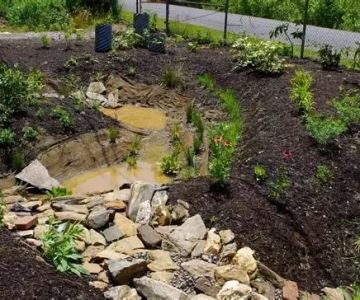
Observe drainage after rain if possible, or schedule a controlled test when appropriate. Look for water moving toward foundations, trapped against structures, eroding soil, carrying sediment offsite, or bypassing intended drains and swales. Do not create flooding or discharge water onto neighbouring property during testing.
Test irrigation and lighting
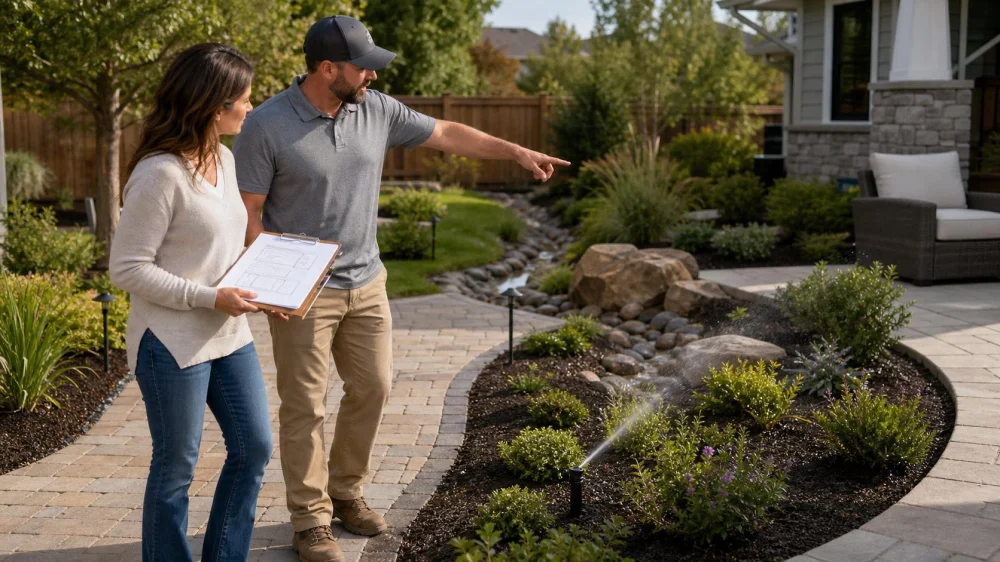
Run irrigation zone by zone with the contractor. Confirm coverage, leaks, overspray, pressure, controller labels, schedules, shutoff location, seasonal adjustment, and how to pause watering after rain or repair. Check that water avoids buildings, pavement, and inappropriate plant areas.
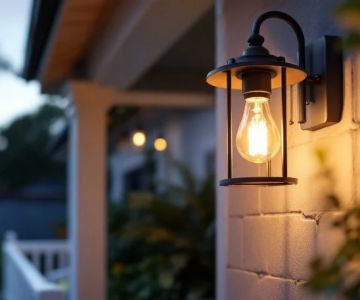
Test lighting after dusk or simulate each circuit safely. Confirm fixture aim, stability, transformer capacity, timer or sensor operation, cable burial or protection, and dark-sky or local requirements. Record model information and demonstrate controls before handover.
Close items with evidence
Agree on who will correct each item, by when, and how it will be verified. Mark an item complete only after reinspection, not after a promise or photo that lacks context. Document accepted substitutions and any owner-approved credit.
Collect warranties, care schedules, plant replacement terms, equipment manuals, product data, permits, inspection approvals, keys, controller access, spare materials, final plan, and contractor contacts. Confirm responsibilities for watering and maintenance during any establishment period.
Punch-list checklist
- Use the latest signed scope and approved changes.
- Number every item and specify its location.
- Compare plant identity, count, size, and placement.
- Check grade, mulch, drainage, and erosion.
- Inspect paving, walls, gates, edges, and cleanup.
- Test irrigation, lighting, timers, and shutoffs.
- Assign due dates and acceptance tests.
- Collect closeout records before final acceptance.
Limitations and safety notes
- This guide is not a substitute for a licensed inspection, design review, or legal advice.
- Do not open electrical equipment, enter excavations, climb structures, or move heavy materials during a walkthrough.
- Retaining walls, gas or electrical systems, structural work, and significant drainage problems may need specialized review.
- Contract, lien, warranty, permit, and payment rules vary by location.
- Stop testing if water, electricity, unstable work, traffic, or equipment creates a hazard.
Frequently asked questions
When should the punch-list walk happen?
Schedule it when the contractor considers the project substantially complete but there is still time and access to correct documented items.
Should small cosmetic issues be listed?
List observable items that relate to the agreed quality or scope, and distinguish them from personal preferences or new work.
Can photos replace a reinspection?
Photos can support closeout, but drainage, operation, alignment, stability, and context may still require an in-person check.
What if a plant dies after acceptance?
Review the written plant warranty, exclusions, watering duties, notice period, and required evidence.
Who keeps the final list?
Both customer and contractor should retain the same dated version and written completion record.
Official sources and evidence notes
EPA WaterSense landscaping guidance covers soil condition, compaction, mulch depth, plant selection, erosion, and water efficiency. EPA also explains that loose construction soil and stored materials can pollute stormwater, supporting a closeout check for stabilization, cleanup, and runoff control.
Schedule a daylight walkthrough
Ask the contractor for the closeout package and schedule a daylight walkthrough plus an irrigation or drainage test. Send the numbered list the same day, then reserve acceptance decisions for the contractually defined verification point.




 Naturescape Lawn and Landscape Care4.0 (32 reviews)
 Zdubs Mowing And More LLC4.0 (21 reviews)
 Tecza Landscape Group3.0 (25 reviews)
 Yoder Advance Landscaping0.0 (0 reviews)
 Talbert Hardscapes5.0 (2 reviews)
 Burrell Lawncare5.0 (1 reviews)
 Downspout Extension Guide: Route Roof Water Safely
 How to Manage Slopes & Drainage in Your Yard - Beautiful Landscapes
 How to Reduce Maintenance with Smart Plant Grouping
 Best Native Wildflowers for Pollinators in Your Region
 How to Build a Patio With Permeable Pavers
 Top 10 Low-Maintenance Plants for American Yards | Beautiful Landscapes