
Landscape Plant Warranties: Track Care, Coverage, and Claims
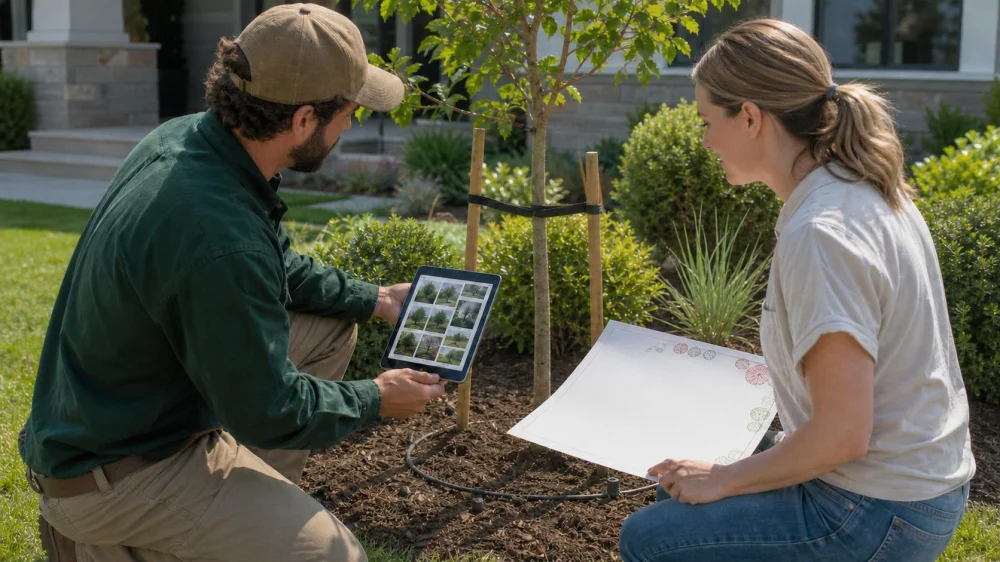
A landscape plant warranty can sound like a promise that every tree, shrub, or perennial will thrive. In practice, coverage often depends on plant type, installation, irrigation, maintenance, weather, animals, homeowner changes, and a short claim window. The useful time to understand it is before planting, when species, location, care responsibility, and replacement terms can still be changed.
Quick answer
Get the plant warranty in writing before installation. Match every covered plant to the plan, invoice, size, quantity, and location. Confirm start and end dates, maintenance obligations, exclusions, notice deadlines, inspection process, labor and delivery costs, replacement limits, and whether a replacement gets a new warranty. Photograph plants and irrigation at handoff, keep care records, and report symptoms promptly without moving, pruning, fertilizing, or replacing the plant before the contractor responds.
Define what is covered
Ask whether coverage applies to plant survival, appearance, establishment, a defined percentage of canopy, or only complete death. A plant can be alive but unsuitable, damaged, or declining; the warranty should explain how those cases are handled.
List the botanical and common name, cultivar, container or caliper size, quantity, and plan location. Confirm whether sod, seed, annuals, bulbs, perennials, groundcovers, transplanted plants, owner-supplied plants, and specialty material have different terms.
Record when coverage begins: purchase, delivery, installation, substantial completion, final payment, or another milestone. Seasonal dormancy can complicate inspection, so define how timing works.
Read exclusions carefully
Common exclusions may include inadequate or excessive watering, irrigation failure, drought, flood, freeze, heat, storm, fire, vandalism, theft, vehicle damage, pets, wildlife, insects, disease, herbicide drift, utility work, soil conditions, and unauthorized pruning or relocation.
An exclusion should not become a substitute for investigating cause. Ask who diagnoses decline, what evidence is used, and whether an independent arborist, horticulturist, laboratory, or extension service can be involved in a dispute.
Verify whether the warranty depends on buying a maintenance package. Separate plant-material coverage from labor, delivery, removal, disposal, soil amendment, staking, irrigation repair, and tax.
Document plants at installation
Before crews leave, walk the project in daylight. Photograph each plant group and individual specimen trees from several angles, including trunk flare, root-ball height, mulch clearance, stakes, ties, irrigation emitters, and surrounding drainage.
Match plant tags and delivery records to the approved schedule without relying only on appearance. Record substitutions and the written approval. Note broken branches, bark injury, wilt, leaning, circling roots, unstable root balls, or a planting depth concern.
Ask for a signed punch list and handoff date. Do not accept a verbal promise that an undocumented concern “will be watched.”
Follow the required care plan
Obtain a site-specific watering and establishment plan that accounts for plant type, root-ball size, soil, weather, sun, slope, drainage, irrigation method, and local restrictions. A fixed calendar alone may overwater or underwater.
Keep records of irrigation checks, rainfall, unusual weather, maintenance visits, photos, and symptoms. Inspect soil moisture where the contractor directs rather than judging only from leaf appearance.
Follow instructions for mulch, stakes, ties, pruning, fertilizing, pest management, and winter protection. Get written approval before changing irrigation, adding chemicals, moving a plant, or hiring another company to treat it.
Report decline early
Watch for wilt, leaf scorch, unexpected leaf drop, discoloration, dieback, loose root balls, bark injury, mushrooms, standing water, dry soil, broken irrigation, pests, or damage from equipment. Some transplant stress can be expected, but the contractor should determine whether intervention is needed.
Send a dated written notice with plant location, photos, when symptoms began, recent weather, watering records, and relevant changes. Ask for an inspection date and interim care instructions.
Do not repeatedly add water, fertilizer, pesticide, or pruning in an attempt to rescue the plant without diagnosis. Call emergency services or the utility for a fallen tree affecting power lines, roads, structures, or immediate safety.
Submit a complete claim
Use the notice method and deadline in the contract. Include contract and invoice number, plant identification, installation date, exact location, symptoms, timeline, care records, photos, and prior communications.
Request written acknowledgement, inspection findings, cause determination, coverage decision, and proposed remedy. Keep the failed plant in place unless removal is necessary for safety or the contractor authorizes it.
If a claim is denied, ask which clause applies and what evidence supports the decision. Consumer-protection, licensing, mediation, arbitration, or legal options depend on the contract and jurisdiction.
Clarify replacement terms
Confirm whether replacement means the same species, cultivar, size, and location or allows a credit or substitution. Availability, changed site knowledge, and season may make a different plant more appropriate.
Define who pays for removal, disposal, delivery, soil work, irrigation changes, planting, mulch, staking, permits, and restoration. Ask whether installation waits for the correct season.
Determine whether a replacement carries a fresh warranty, the remaining original term, or no further coverage. Document the new plant and care plan as carefully as the first.
Frequently asked questions
Does a one-year warranty cover every cause of death?
No. Read the defined coverage, maintenance duties, exclusions, and evidence process.
Should I remove a dead plant before filing?
Not unless safety requires it or the contractor authorizes removal. The plant may need inspection.
Are labor and delivery included?
Not automatically. Ask separately about plant material, removal, transport, installation, and site repair.
Does a replacement restart the warranty?
Only if the written terms say so. Confirm the new coverage in writing.
Next steps
Before installation, turn the warranty into a checklist: covered plants, dates, standard, exclusions, care, notice, inspection, costs, remedy, and replacement coverage. At handoff, photograph every plant, receive the care plan, and schedule recurring moisture and condition checks.
Keep the warranty file with the planting plan, invoice, plant list, irrigation settings, maintenance visits, and dated photos. If property ownership or maintenance responsibility changes, transfer the records and notify the contractor when the terms require it. A clear chain of care makes future questions easier to resolve.


 Meyer Exteriors4.0 (8 reviews)
 The Secret Garden4.0 (25 reviews)
 M & J Landscaping Perez LLC4.0 (19 reviews)
 Global Tech Hydroseeding Erosion Control5.0 (1 reviews)
 Warsaw Siding Supply Co.0.0 (0 reviews)
 David J. Frank Landscape Contracting5.0 (2 reviews)
 How to Build a Vertical Herb Wall for Cooking Convenience at Home
 How to Landscape With Large Pots and Statement Planters for Modern Homes
 How to Create a Nighttime Garden Experience
 How to Add Drama With Tall Grasses and Sculptural Plants
 Contemporary Hardscape Trends to Watch in 2025 for Modern Outdoor Living
 Best Ways to Stage Your Front Yard for Curb Appeal