
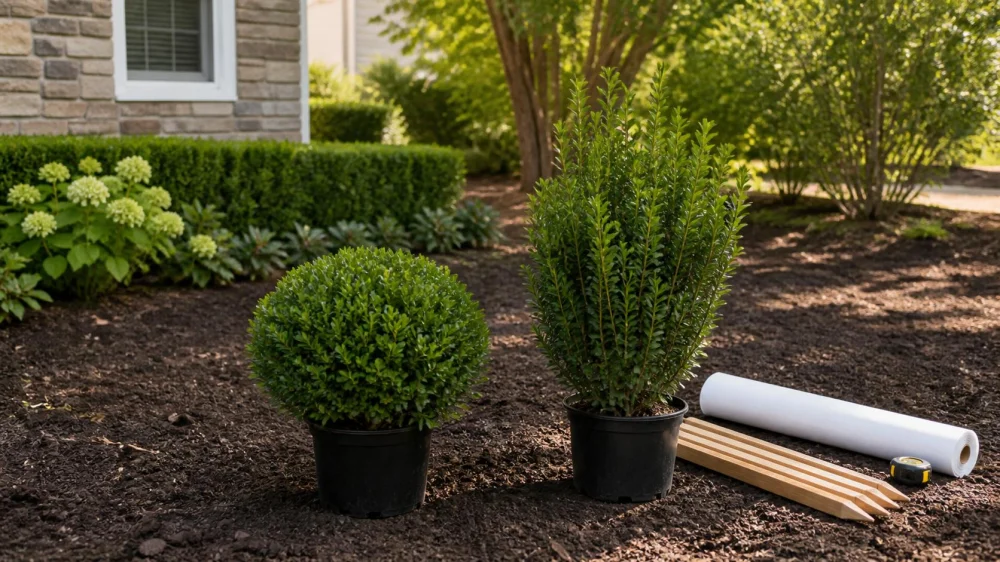
Landscape Plant Substitutions: Compare the Site, Mature Size, and Care
On this page
Quick answer
When a landscaper or nursery proposes a substitute plant, compare more than flower color. Confirm the exact botanical name and cultivar, hardiness, light, soil, drainage, moisture, mature height and width, growth habit, roots, bloom and fruit, wildlife value, known local pest or invasive concerns, maintenance, and warranty. Approve the change in writing before installation.
A good substitute performs the same job in the actual site without creating new conflicts as it matures.

Ask why a substitution is proposed
A specified plant may be unavailable, poor quality, out of season, unsuitable for the site, prohibited locally, or outside budget. The reason affects the best response. A temporary supply problem might justify waiting; a site mismatch calls for a different selection.
- Request the original and proposed plant names.
- Ask whether the change affects price, quantity, or warranty.
- Confirm whether the substitution is permanent.
- Ask when acceptable stock is expected if you wait.
- Do not accept unlabeled “equivalent” plants without details.
Match the actual site
University extension guidance emphasizes matching trees and shrubs to soil, light, climate, water, and residential conditions. Recheck the precise planting spot because shade, reflected heat, wind, drainage, road salt, irrigation, and competition can change over a short distance.
A plant that survives in the regional hardiness zone may still perform poorly in a wet low point, dry foundation bed, narrow strip, or windy corner.

Compare mature size and form
Compare expected mature height and width, not the container size. Also compare upright, spreading, arching, clumping, or suckering growth. A narrow young shrub can eventually cover a window, path, air-conditioning unit, or neighboring plant.
- Mark the mature footprint on the plan.
- Check overhead wires and roof edges.
- Check sidewalks, drives, fences, and property lines.
- Allow access to meters, valves, and equipment.
- Decide whether routine pruning is realistic.
Preserve the design function
The original plant may provide screening, shade, seasonal color, erosion control, a focal point, fragrance, pollinator support, or a low edge. Name the function, then test the substitute against it. Similar flowers do not compensate for a plant that is too short to screen or too open to define a boundary.
Compare the seasons when leaves, flowers, fruit, bark, or evergreen structure are present.
Compare long-term care
Ask about establishment watering, ongoing irrigation, pruning, cleanup, staking, winter protection, fertilizer, and common local problems. A cheaper substitute can cost more if it needs frequent shaping, replacement, or pest treatment.
Check whether fruit, thorns, sap, pollen, toxicity, or dropped material conflicts with children, pets, vehicles, pools, entrances, or seating areas.
Verify identity and approval
Review nursery tags before planting and photograph each tag with its intended location. Botanical name and cultivar matter because plants sharing a common name can mature differently. Confirm quantity, container or caliper size, condition, and warranty terms.
Record the approved change on the plant schedule, site plan, proposal, and maintenance notes so future care is based on what was actually installed.
Important limitations
This is general U.S. landscape-planning guidance. Performance varies with region, microclimate, cultivar, nursery stock, installation, weather, wildlife, and care. Consult local extension, qualified landscape professionals, utility owners, and applicable invasive-species or planting rules.
Evidence notes
Extension “right plant, right place” guidance treats the planting site as equally important as the plant and highlights soil, light, climate, water, space, and mature dimensions. A substitution checklist translates those criteria into a documented project decision.
FAQ
Is the same flower color enough?
No. Site fit, mature size, form, function, and maintenance can be more important.
Should I compare common names?
Use the botanical name and cultivar because common names can refer to different plants.
Can a substitute change the project price?
Yes. Confirm material, quantity, labor, and warranty changes in writing.
What if the substitute is larger at installation?
Initial size does not predict mature fit; compare long-term dimensions and structure.
Who can help assess local suitability?
Local extension services, qualified landscape professionals, and reputable nurseries can provide regional context.
Next steps
Write down the intended function, photograph the site, compare both plants against the same criteria, and mark mature size on the plan. Approve the exact name, cost, quantity, and warranty before planting.
 Northern Outdoor Services5.0 (4 reviews)
 Mader Design LLC5.0 (4 reviews)
 Deppe Landscape & Design/Riverside Metals, L.L.C.5.0 (2 reviews)
 Stillman Valley Nursery & Garden Center4.0 (17 reviews)
 Hy-Tech Landscaping4.0 (122 reviews)
 BAM Outdoor3.0 (87 reviews)
 How to Use Perennials to Create a Low Maintenance Garden
 How to Maintain Your Garden Tools for Longevity
 How to Plan Outdoor Fire & Water Features Harmoniously for Your Garden
 How to Design a Garden That Ages Gracefully
 How to Create a Timeless Garden That Grows More Beautiful Each Year
 How to Build a Garden That’s Easy to Update Over Time