
- 1. Understanding Curves and Straight Lines in Garden Design
- 2. The Impact of Curves vs. Straight Lines in Garden Design
- 3. Where to Use Curves and Straight Lines
- 4. Choosing the Right Style for Your Garden
- 5. Real-Life Garden Design Examples
1. Understanding Curves and Straight Lines in Garden Design
Garden design is not just about plants and flowers—it's about creating a harmonious space that reflects both functionality and aesthetic appeal. One of the primary decisions when planning a garden is choosing between curves and straight lines. Each has its own distinct character and can dramatically influence the overall feel of your garden. In this article, we’ll explore how both curves and straight lines are used in garden layouts, helping you determine which style works best for your outdoor space.

Illinois Valley Landscape Supply
MarseillesLaSalle CountyIllinois
2580 US-6, Marseilles, IL 61341, USA
2. The Impact of Curves vs. Straight Lines in Garden Design
The choice between curves and straight lines is one of the most fundamental aspects of garden design. Both styles offer unique benefits, and understanding their impact can help you decide which to use based on your vision and space.
Brush Creek Landscaping and Lawn Care
22117 Co Rd F, Archbold, OH 43502, USA
2.1. The Elegance of Curves
Curves are often associated with natural beauty, offering a sense of fluidity and softness. They are great for creating a relaxed, organic feel in the garden. Curved garden beds or winding pathways can draw the eye through the space, creating visual interest and enhancing a sense of movement. Curves are ideal for gardens that aim to mimic the forms found in nature, offering a more informal and whimsical atmosphere.
2.2. The Precision of Straight Lines
In contrast, straight lines exude a sense of order and structure. A garden with well-defined, straight lines—such as straight pathways, symmetrical plant beds, or geometric features—can give the garden a more modern or formal look. Straight lines are perfect for creating a balanced, tidy environment that’s easy to maintain and looks visually crisp. They work well in smaller spaces or minimalist designs where precision and clarity are key.
3. Where to Use Curves and Straight Lines
The decision of where to incorporate curves or straight lines is influenced by the type of garden you’re designing and the effect you want to achieve. Here are some ideas on how to use both in your garden layout:
3.1. Curves for Softening Edges
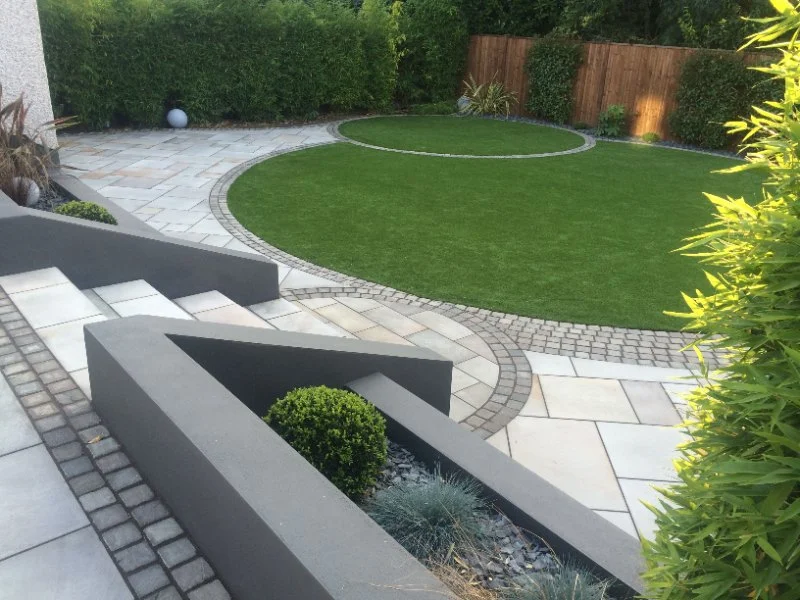
Curves are excellent for softening the hard edges of a garden, especially when you have a lot of straight features like fences or patios. Curved flower beds or gentle, meandering paths can break up these rigid lines, making the space feel more inviting and natural.
3.2. Straight Lines for Focal Points
Straight lines are perfect for creating focal points, such as aligning trees, shrubs, or hedges along a straight path to draw the eye toward a specific feature. You can use straight lines to create symmetry and structure, directing attention to garden art, water features, or sculptures.
3.3. Blending Both for Balance
One of the most effective ways to use curves and straight lines is by blending both in the same design. For example, you can create a straight path leading to a circular seating area or a round flower bed. This combination of hard and soft edges adds visual variety and ensures your garden doesn’t feel too monotonous or too chaotic.
4. Choosing the Right Style for Your Garden
Understanding the overall style of your garden will help you decide how to incorporate curves and straight lines. Here’s how each style can benefit from the use of either element:
4.1. Traditional Gardens
Traditional gardens often favor the use of curves, especially in flower beds and winding paths. The relaxed, informal nature of curves helps create a sense of timeless beauty. Curved edges around lawn areas and gently meandering pathways give the garden a classic, flowing look.
4.2. Modern Gardens
In contrast, modern gardens typically use straight lines to create sharp, clean edges that align with minimalist designs. Straight lines in modern gardens help create a sense of order and precision. Symmetrical plantings, rectangular garden beds, and linear water features can all contribute to the sleek, sophisticated feel of a modern garden.
4.3. Cottage Gardens
Cottage gardens strike a balance between curves and straight lines. While many of the planting areas may be informal and curved, straight lines can help define the paths and garden borders. This combination adds structure while still maintaining a relaxed, lived-in feel.
5. Real-Life Garden Design Examples
To see how curves and straight lines are used effectively in garden design, let’s look at some real-world examples:
5.1. A Formal Garden with Straight Lines
A formal garden in a classic French style often incorporates perfectly aligned rows of flowers, shrubs, and hedges. The symmetrical paths and clear-cut edges create a sense of order and elegance. This style of garden is perfect for those who enjoy a neat, structured space.
5.2. A Japanese Zen Garden with Curves
Japanese Zen gardens typically embrace the use of curves in both the arrangement of plants and the design of the landscape. Curved gravel paths, gentle curves of water features, and asymmetrical plant arrangements create a peaceful, meditative environment. The use of curves emphasizes harmony and natural beauty.
5.3. A Contemporary Urban Garden with Blended Features
In a contemporary urban garden, designers often blend straight lines and curves to create contrast and balance. A straight-edged wooden deck can lead to a circular firepit area, while geometric plant beds can be softened by curving pathways. This design brings a sense of openness and modernity while maintaining warmth and approachability.
If you’re looking to create your own unique garden, whether with curves, straight lines, or a combination of both, check out Beautiful Landscapes for the best garden design services, products, and ideas tailored to your style and needs.



 Legacy Hardscape LLC5.0 (8 reviews)
 Walmart Patio & Garden Services0.0 (0 reviews)
 Walmart Patio & Garden Services0.0 (0 reviews)
 Snider Landscaping5.0 (24 reviews)
 Gabe's Greenworks & landscaping4.0 (20 reviews)
 Midwest Lawn and Property Services LLC5.0 (7 reviews)
 How to Use Planters to Extend Planting Zones and Grow More Plants
 How to Grow Climbing Plants on Pergolas & Trellises
 How to Choose Eco-Friendly Outdoor Flooring Options: Sustainable Choices for Your Garden
 htmlCopy codeHow to Create a Bee-Friendly Yard Without Attracting Pests
 How to Choose Mulch Based on Soil Type
 How to Landscape With Fragrant Plants for a Pleasant Garden