
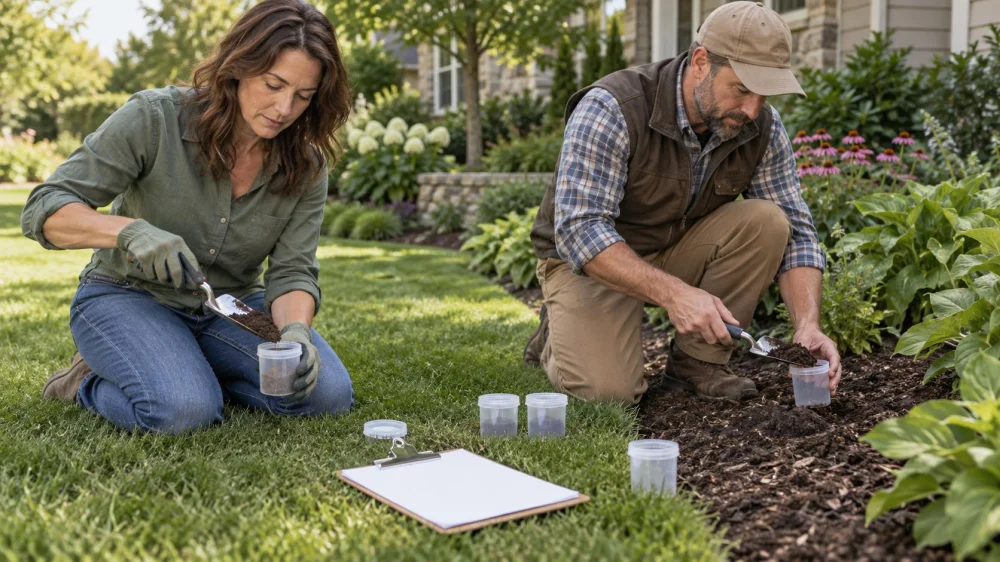
Landscape Soil Test: Sample Zones, Labels, and Results
On this page
Quick answer
Choose a soil-testing laboratory before collecting samples and follow its instructions for depth, tools, quantity, and packaging. Sample lawn, vegetable, tree, and visibly different areas separately, label every zone, and record recent fertilizer or amendment use. Use the report with local plant needs and site drainage; do not add lime, fertilizer, or other amendments from guesswork alone.

Precision Landscapes LLC
West OliveOttawa CountyMichigan
10203B Lake Michigan Dr, West Olive, MI 49460, USA
Define the decision
Write down what the test should help decide: preparing a new bed, investigating weak growth, checking pH, or planning nutrients for a particular crop or lawn. The goal determines which analysis and sampling instructions you need.
Contact the laboratory or local Cooperative Extension service before collecting anything. Ask about submission forms, fees, turnaround time, approved containers, and whether the lab tests ordinary fertility, texture, salts, or possible contamination.
Separate meaningful zones
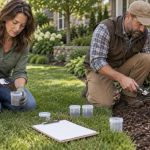
Make a simple map and divide the property by use and condition. A vegetable bed, established lawn, shrub border, recently filled area, and a patch with unusual growth should not automatically be combined. Keep a problem spot separate from a healthy comparison area.
Label each zone with a short unique name and record slope, sun, irrigation, drainage, recent construction, plant history, and products applied. Photographs can help connect the report to the correct place later.
Follow the laboratory method
Use the depth, number of subsamples, mixing method, and clean tool specified by the chosen laboratory. Avoid obvious debris, fertilizer granules, compost piles, pet-waste areas, and locations directly beside roads or structures unless the lab specifically wants those conditions sampled.
Keep labels attached to the correct container and complete the requested crop or plant information. Do not improvise a sampling depth or submit wet soil when the laboratory instructs otherwise.
Read results in context
A laboratory report may provide measurements and amendment recommendations for the plant and area named on the form. Units, extraction methods, target ranges, and recommendations can differ among labs, so compare results within the report's own guidance rather than using a generic internet chart.
The EPA's WaterSense home-maintenance guidance links healthy soil and grading with water infiltration and suggests consulting USDA or Cooperative Extension resources for soil testing and soil-specific strategies.
Turn findings into a plan
Match each recommendation to the mapped zone and calculate the actual treatment area before buying material. Confirm whether the rate is per application or per year, whether incorporation is required, and how irrigation, mulch, or plant choice affects the plan.
Record the product analysis, amount, date, and area treated. Schedule follow-up testing according to the laboratory's advice instead of testing immediately after an amendment and expecting a stable result.
Important limits
A routine fertility test does not automatically test for lead, pesticides, pathogens, petroleum, or every other contaminant. If exposure, imported fill, flooding, industrial history, or an unknown spill is a concern, contact local environmental or health authorities and use an appropriately accredited laboratory.
Frequently asked questions
Can I combine samples from the whole yard?
Only if the laboratory allows it and the areas share the same use, soil history, and condition. Separate zones usually produce more actionable results.
Should I sample after adding fertilizer?
Ask the laboratory. Recent inputs may affect results, and the form should record what was applied and when.
Does a soil test diagnose poor drainage?
Not by itself. Surface flow, grading, compaction, infiltration, irrigation, and subsurface conditions may need separate assessment.
Can I use one recommendation for every plant?
No. Recommendations depend on plant type, area, and management goal. Confirm what the report was calibrated to support.
Sources and evidence notes
This workflow uses EPA WaterSense guidance on soil health, infiltration, and professional soil testing. Exact collection and interpretation steps must come from the selected laboratory or local Extension program.
Next steps
Choose the laboratory, download its current instructions, map the landscape zones, and create durable labels before sampling. When results arrive, translate each recommendation into an area-specific material, rate, timing, and follow-up record.




 Precision Landscapes LLC3.0 (8 reviews)
 Crossroads Property Services4.0 (41 reviews)
 Zelenka Landscaping5.0 (1 reviews)
 Augusta Lawn Care Services of Hudsonville5.0 (54 reviews)
 Carter's Cuts Lawncare & Landscaping4.0 (13 reviews)
 H & K Landscaping3.0 (7 reviews)
 Sprinkler Overspray Check: Heads, Wind, and Hardscape
 Landscape Soil Test: Sample Zones, Labels, and Results
 Landscaping Completion Review: Test the Result Before Sign-Off
 Landscaping Written Estimate: Compare Labor, Materials, and Terms
 Garden Hose Route: Protect Walkways and Connections
 Landscape Bed Measurements: Map Curves, Plants, and Access