
Landscape Crew Access Plan: Gates, Parking, and Protection
Table of contents
Quick answer: Walk the proposed crew route with the contractor before landscaping starts. Confirm gate openings, overhead and side clearance, slopes, steps, weak paving, utility areas, parking, material staging, and protection for plants and walls. Decide who unlocks access, where pets and children will stay, what must remain usable, and how the crew will secure and clean the route at the end of each day.

MAX Property Preservation
WinchesterRandolph CountyIndiana
224 W Franklin St, Winchester, IN 47394, USA
Map the route before work begins
Start at the street or approved parking point and trace movement to the work area. Mark crew entry, equipment routes, material staging, waste removal, and any separate delivery route. A sketch reduces blocked driveways, damaged beds, and access surprises.
Ask what vehicles, machines, carts, and material lengths are expected. A pedestrian route may not suit a loaded wheelbarrow, mini loader, long panel, or root ball. Confirm any temporary removal, who performs it, and how restoration is scoped.
Identify areas that must stay available: a main entrance, accessible route, garage bay, trash pickup point, emergency access, shared driveway, irrigation control, or utility equipment. Put temporary closures and alternate routes in the plan rather than deciding after work begins.

ARO Landscaping LLC
BrookvilleMontgomery CountyOhio
13832 Upper Lewisburg Salem Rd, Brookville, OH 45309, USA
Check gates, clearance, and surfaces
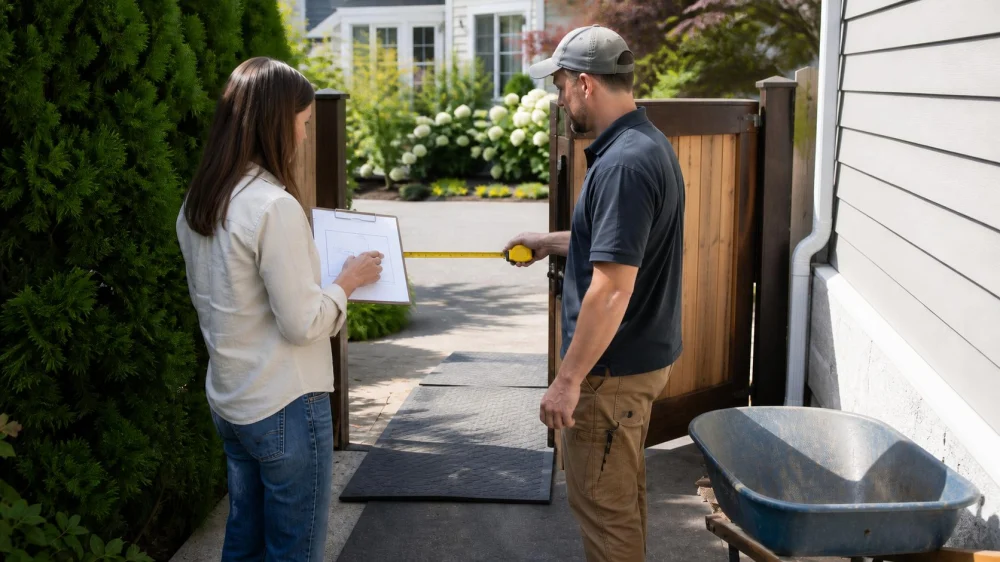
Measure the clear opening, not just nominal gate width. Hinges, posts, downspouts, branches, meters, and fixtures can narrow it. Check overhead clearance and tight turns that long materials cannot negotiate.
Walk the ground for steps, steep cross-slopes, soft soil, drainage channels, loose pavers, septic components, irrigation boxes, and hidden edging. Ask what ground protection is appropriate for the equipment and load. Mats may spread weight and limit surface damage, but they do not guarantee that delicate paving, saturated soil, buried structures, or tree roots can carry a machine.
Photograph the route, walls, fences, paving, plants, and fixtures before mobilization. Label existing damage so both sides can distinguish it from project changes.
Coordinate parking and daily access
Confirm parking, required approvals, and delivery turnaround. Keep hydrants, mailboxes, neighboring driveways, sight lines, and restrictions clear. If space is limited, assign delivery windows.
Record work hours, first arrival, lock procedure, and contacts. Prefer time-limited codes or supervised access over permanent credentials. Decide how early deliveries and weather delays will be communicated.
If access crosses a neighbor's property or a shared drive, obtain the required written permission before scheduling the work. The project contract should identify responsibility for protection, cleanup, and restoration rather than relying on a verbal understanding.
Protect the home, yard, people, and pets
Mark plants, branches, walls, windows, outdoor furniture, irrigation heads, and utilities that need protection. Move fragile or personal items before the crew arrives. Agree whether dust barriers, corner guards, plywood, mats, temporary fencing, or hand-carrying will be used, and who supplies them.
Keep children and pets fully separated from the work route and staging area. A familiar closed gate may be propped open, and noise can change an animal's behavior. Use an indoor room, secure enclosure, or off-site arrangement that does not depend on workers noticing a pet. Tell the crew about animals, but keep containment responsibility with the household.
Do not mark underground utilities by guesswork. Use the applicable utility-location service before digging, and discuss private lines such as irrigation, lighting, propane, septic, or outbuilding power that a public locator may not mark. A qualified contractor should decide how the work proceeds around identified services.
Close out the site each day
Agree on a daily stopping condition. Tools and keys should be removed or secured, excavations protected, gates restored, temporary barriers stable, and public or household routes left in the planned condition. Loose soil, mud, sharp waste, hoses, and cords should not create an unmarked trip or access hazard.
Choose one place for daily questions and photos. Record route damage, a protection failure, changed equipment, or an access conflict as soon as it appears. If the crew needs a different entry or heavier machine, pause and update the route and protection plan before using it.
Frequently asked questions
Who should measure the access route?
The homeowner can provide initial dimensions, but the contractor should verify that the complete route suits the actual equipment, loads, turns, and working method before mobilization.
Can a fence panel be removed for access?
Sometimes. Confirm ownership, utilities, permits or approvals, temporary security, storage, weather protection, cost, and the standard for reinstalling it before removal.
Should materials be staged on the driveway?
Only after checking load, staining, drainage, vehicle access, and protection. Record the approved footprint and how long the material may remain there.
What if rain makes the route soft?
Let the contractor reassess ground capacity and protection. Delaying equipment movement can be safer and less costly than repairing rutting, compacted soil, broken irrigation, or damaged roots.
Next steps
Create a one-page access sheet with the route sketch, clear dimensions, parking and staging locations, protected features, utility notes, daily hours, contact method, pet plan, and closeout standard. Walk it with the contractor, attach dated photos, and include any cost or scope consequences in writing. Revisit the plan whenever equipment, weather, deliveries, or the work area changes.





 Eco Harmony Landscape & Design4.0 (46 reviews)
 Foxcroft Meadows Sod4.0 (50 reviews)
 C & L Lawncare3.0 (12 reviews)
 Midwest Block and Brick - Quincy4.0 (16 reviews)
 Turf Tenders Inc0.0 (0 reviews)
 Duran's Landscaping2.0 (3 reviews)
 How to Revive Dead Grass: A Complete Step-by-Step Guide to Lawn Care
 How to Create a Low-Water Turf Alternative | Beautiful Landscapes
 How to Landscape Around Solar Panels or Roof Gardens
 How to Protect Existing Trees During a Landscaping Project
 How to Grow a Native Plant Garden with Minimal Care – Expert Tips
 Tips for Maintaining a Lawn in a Hot, Dry Summer