
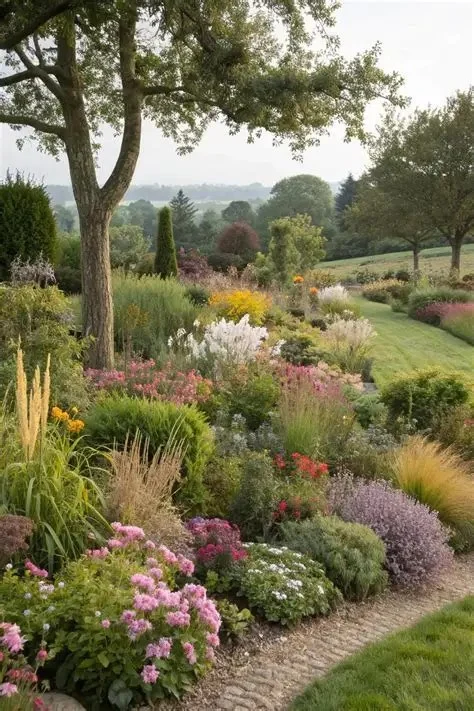
- placement-strategy-basics - Understanding how accent trees shape visual direction in a yard
- focal-point-design-principles - How focal point trees guide attention and balance space
- layering-with-ornamental-trees - Combining structure and softness for depth
- seasonal-impact-planning - Choosing trees that change your landscape year-round
- real-world-yard-transformations - Practical examples of accent tree design in action
How Accent Trees Create Powerful Visual Impact in Outdoor Spaces
Outdoor design often succeeds or fails based on one idea: where the eye goes first. In landscape planning, accent trees act as visual anchors that shape how a space is experienced. Instead of filling a yard evenly with greenery, designers intentionally highlight a few standout trees to create structure, emotion, and direction.
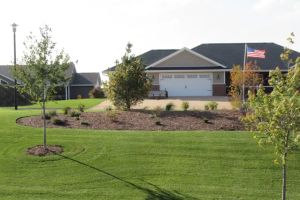
Think of a quiet suburban home where everything blends together—grass, shrubs, fencing. Now imagine a single flowering ornamental tree placed slightly off-center near the entry path. That one element immediately changes the entire perception of the space. This is the core principle behind using trees for visual impact.
Placement Strategy That Defines the Entire Landscape
1. Creating Natural Visual Pathways
Placement is not about symmetry—it is about flow. When accent trees are positioned correctly, they naturally guide the eye from one area to another. This technique is commonly used in modern residential design where the goal is to make even small yards feel larger and more intentional.
For example, placing a tall ornamental maple near a driveway entrance creates a subtle “welcome cue.” The viewer’s gaze naturally follows the trunk upward and then across the canopy, which leads them toward the home itself.

Walmart Patio & Garden Services
Columbia CityWhitley CountyIndiana
402 W Plaza Dr, Columbia City, IN 46725, USA
2. Breaking Visual Monotony in Flat Spaces
Many residential lawns suffer from uniformity—large green rectangles with no focal point. Introducing a single standout tree breaks that monotony. Designers often call this a “visual interruption technique,” where one contrasting element changes how all surrounding space is perceived.
A real homeowner case in Oregon showed a backyard transformation where a plain lawn was upgraded by adding just two Japanese maples. The result was immediate: the space felt structured, calmer, and significantly more expensive-looking without major construction work.
Focal Point Trees and Emotional Design Principles
1. Why the Eye Always Needs a Destination
Human perception naturally seeks focus. Without a focal point, outdoor environments feel directionless. Focal point trees solve this by giving the eye a resting place. This is why landscape architects often design around one central tree rather than multiple competing elements.
A flowering dogwood or a sculptural olive tree can serve this purpose effectively, especially when placed near entryways or courtyard corners.
2. Emotional Influence Through Seasonal Change
Accent trees are powerful because they change over time. Spring blossoms, summer shade, autumn color shifts, and winter silhouettes each tell a different visual story.
In one widely shared landscaping case from a suburban renovation project in the Midwest, homeowners reported that their front yard felt “completely different every season” after introducing a single crabapple tree as a focal point.
Layering Structure with Ornamental Trees
1. Combining Height, Texture, and Density
Layering is what transforms a simple yard into a designed environment. Accent trees provide height, while shrubs and ground cover fill mid and low levels. The combination creates depth, which is essential for a professional-looking landscape.
For instance, placing a tall birch tree behind a cluster of hydrangeas adds contrast in both texture and scale, making both elements more visually powerful.
2. Avoiding Overcrowding in Design
One common mistake is using too many focal elements. When every tree is trying to stand out, none of them succeed. The goal is restraint—one or two strong accent trees per visible zone is usually enough.
Seasonal Planning for Long-Term Visual Impact
1. Designing Beyond Summer Greenery
A well-designed yard does not rely on one season. Choosing trees with multi-season appeal ensures year-round visual interest. Some ornamental varieties offer blossoms in spring, dense shade in summer, vibrant foliage in fall, and structural elegance in winter.
2. Matching Trees to Climate and Space
Climate compatibility is essential. A tree that thrives in one region may underperform in another, reducing its visual impact. Professional designers always match species with local environmental conditions to maintain long-term balance and health.
Real-World Transformations Using Accent Trees
1. Small Urban Yard Upgrade Example
In a compact city home renovation, a single flowering cherry tree was installed in a tight front yard space. Before the change, the area felt cramped and overlooked. After planting, the same space became a neighborhood focal point, with neighbors often stopping to admire it during bloom season.
2. Suburban Front Yard Redesign Case
Another example involved a traditional suburban property where designers introduced two strategically placed evergreens. These trees framed the home, created symmetry, and improved curb appeal significantly without altering the house structure itself.
Homeowners exploring similar improvements often turn to resources like Beautiful Landscapes for inspiration and curated ideas on ornamental tree selection and placement strategies.
Design Psychology Behind Accent Trees
1. The Illusion of Space Expansion
Well-placed trees can make a small yard feel larger by guiding perspective. When the eye is drawn toward a focal point, surrounding space feels more organized and expansive.
2. Creating Memory Points in Outdoor Environments
People remember spaces not as a whole but through highlights. A striking tree near an entrance or patio becomes a mental anchor, making the space more memorable and emotionally engaging.
Practical Design Considerations Before Planting
1. Growth Direction and Maintenance Needs
Before planting accent trees, it is important to consider long-term growth patterns. Some trees expand outward significantly, while others grow vertically. Choosing the wrong shape can disrupt visual balance over time.
2. Light, Soil, and Placement Accuracy
Even the most visually impressive tree will fail to thrive without proper environmental conditions. Soil quality, sunlight exposure, and spacing from structures must all be evaluated carefully before installation.
3. Long-Term Visual Harmony Planning
Good design is not just about immediate appearance—it is about how the landscape evolves. Accent trees should integrate naturally into the environment as they mature rather than overpower it.




 DEL - Diverse Environmental Landscapes4.0 (41 reviews)
 Lykins lawncare and landscaping llc5.0 (2 reviews)
 GLC Greg's Lawn Care5.0 (2 reviews)
 Juan Trejo & Son Landscaping Inc3.0 (4 reviews)
 Schultz Lawn Care4.0 (432 reviews)
 Angry Beaver Stump Removal LLC0.0 (0 reviews)
 Best Native Wildflowers for Pollinators in Your Region
 How to Plan a Backyard That Balances Play and Relaxation
 How to Plan Outdoor Fire & Water Features Harmoniously
 7 Steps to Create a Pollinator Garden That Attracts Bees & Butterflies
 How to Install Low-Voltage Lighting in Your Garden: A Step-by-Step Guide
 How to Grow a Herb Garden in Your Landscape: A Step-by-Step Guide