
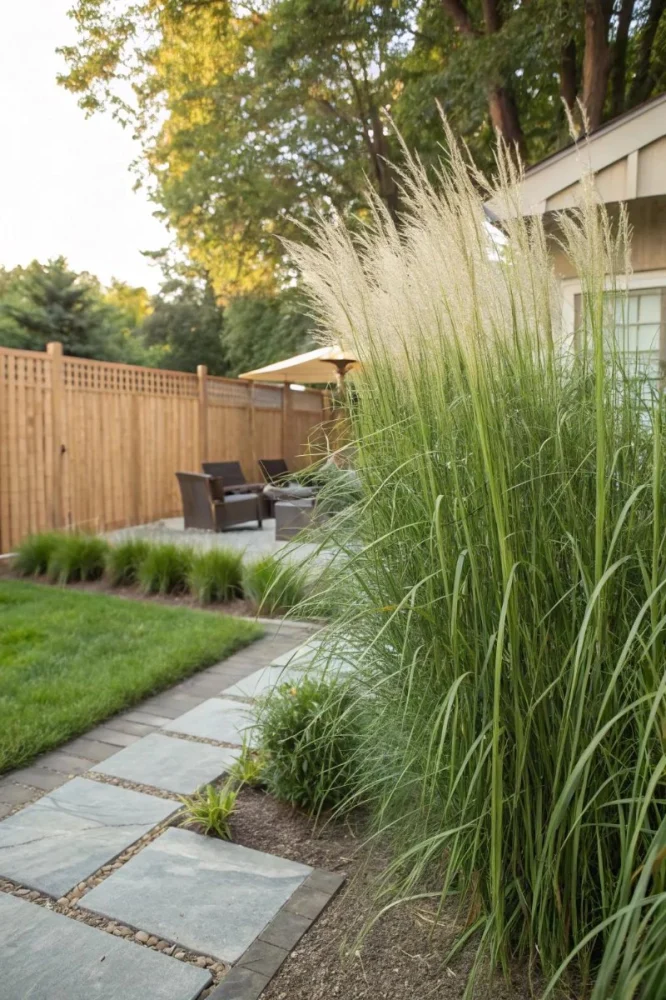
- 1 - Benefits of Ornamental Grasses - Why choose grasses as natural barriers
- 2 - Choosing the Right Species - Selecting grasses for height, texture, and climate
- 3 - Planting and Spacing Tips - Creating effective soft barriers
- 4 - Maintenance and Care - Ensuring grasses thrive and provide year-round appeal
- 5 - Real-Life Examples - Gardens and landscapes using ornamental grasses as barriers
- 6 - Additional Resources - Tools, plants, and professional advice
1. Benefits of Ornamental Grasses - Why choose grasses as natural barriers
Ornamental grasses offer a natural, flexible alternative to fences or walls. They provide privacy, reduce noise, and create a sense of enclosure without harsh structural elements. Their movement in the wind adds dynamic beauty to a garden, and they can soften edges or transitions between spaces.
Unlike rigid barriers, ornamental grasses enhance biodiversity, attracting birds and beneficial insects, while also requiring less invasive installation. Their seasonal changes in color and texture create year-round interest in your landscape design.

ER Yard & Landscape Drainage
Mount ProspectCook CountyIllinois
1004 Cypress Dr, Mt Prospect, IL 60056, USA
2. Choosing the Right Species - Selecting grasses for height, texture, and climate
Choosing the appropriate species is critical. For tall, dense barriers, consider pampas grass, miscanthus, or maiden grass. For medium height or accent areas, fountain grass and feather reed grass provide softer textures and movement. Pay attention to your local climate, sunlight, and soil conditions to ensure healthy growth.
Some ornamental grasses are deciduous, losing foliage in winter, while others remain evergreen. Selecting a mix can create visual interest across seasons. Beautiful Landscapes offers curated plant recommendations suitable for diverse U.S. climates and garden sizes.

Valley View Landscaping and Greenhouse
AllentonWashington CountyWisconsin
9085 St Kilian Heights Rd, Allenton, WI 53002, USA
3. Planting and Spacing Tips - Creating effective soft barriers
Planting strategy affects both aesthetics and functionality. Dense clusters of grasses create more privacy, while staggered arrangements offer a more natural appearance. Space taller grasses 3–5 feet apart and smaller varieties 2–3 feet apart to allow for growth and airflow.
Consider layering grasses with complementary perennials or shrubs to enhance texture and color. Curved planting beds or borders can help integrate grasses as visual and functional elements rather than simple straight-line barriers.
4. Maintenance and Care - Ensuring grasses thrive and provide year-round appeal
Regular maintenance keeps grasses healthy and effective as soft barriers. Trim dead foliage in early spring to encourage fresh growth. Divide clumps every few years to prevent overcrowding and maintain density. Watering needs vary by species, so establish a schedule suited to your chosen grasses.
Fertilization with slow-release organic fertilizers can promote strong roots and vibrant foliage. Mulching around the base helps retain soil moisture and suppress weeds, ensuring your ornamental grass barriers continue to thrive.
5. Real-Life Examples - Gardens and landscapes using ornamental grasses as barriers
In California, the Smith family transformed a backyard patio into a private retreat using a combination of pampas and fountain grasses along the perimeter. The grasses not only provided privacy from neighbors but also added movement and seasonal color to their outdoor space.
Another example is a community garden in Texas that uses feather reed grass to separate vegetable plots from walking paths. The grasses act as a visual buffer and attract pollinators, enhancing both aesthetics and ecosystem health. For guidance on sourcing and planting ornamental grasses, Beautiful Landscapes offers expert advice and product recommendations.
6. Additional Resources - Tools, plants, and professional advice
Using ornamental grasses effectively requires the right tools and resources. Quality planting tools, mulch, and fertilizers make installation and maintenance easier. Professional landscape designers can provide layout plans and species suggestions to ensure optimal results.
Beautiful Landscapes curates plants, tools, and expert guidance for homeowners looking to implement ornamental grasses as soft barriers, making it simple to create functional and visually appealing landscapes.


 Joe's Lawn Care Service4.0 (10 reviews)
 Cook's Nursery4.0 (21 reviews)
 C & H Mowing4.0 (3 reviews)
 Hughes Nursery and Landscaping4.0 (13 reviews)
 The BackyarDream Landscaping5.0 (39 reviews)
 A Balderas Landscaping & Snow Removal Corp.4.0 (10 reviews)
 How to Add Drama With Tall Grasses and Sculptural Plants
 How to Choose Drought-Resistant Grass for Your Region: Expert Tips
 How to Revive a Neglected Lawn Step by Step
 How to Design a Backyard Entertainment Zone
 How to Create a Landscape That’s Perfect for Pets
 How to Landscape for Seasonal Wildlife Attraction: Creating Habitats for Nature's Visitors